
Getting guests to genuinely connect at a social event is harder than it looks. You can set up a great venue, curate a playlist, and still watch people cluster in their usual groups, barely mixing. Cuban salsa changes that dynamic fast. It gives everyone a shared task, a rhythm to follow, and a reason to laugh together. This guide walks you through everything you need to organize and deliver a Cuban salsa lesson in Wrocław, from the gear and space requirements to the step-by-step lesson flow, common pitfalls, and realistic progress milestones your group can celebrate.
| Point | Details |
|---|---|
| Everyone can start | Cuban salsa lessons are accessible for complete beginners and non-dancers. |
| Quick social readiness | Most groups become comfortable dancing together after only a few sessions. |
| Cultural immersion | Cuban salsa provides engaging, memorable experiences that bring people together. |
| Short practice sessions work | Consistent, brief practice is proven to boost group learning and enjoyment. |
| Flexible group formats | Partner and group-based formats like rueda de casino maximize participation and fun. |
Before your guests step onto the floor, a few practical elements need to be in place. Getting these right means the lesson runs smoothly and your group stays focused on having fun rather than dealing with avoidable friction.
Space and floor surface matter more than most organizers expect. Cuban salsa, especially the circular group-oriented Cuban salsa style known as rueda de casino, requires an open floor where people can move in a circle without bumping into furniture. A smooth, non-carpeted surface is ideal. Aim for at least 2 square meters per person as a baseline.
Sound system and music are non-negotiable. Authentic Cuban salsa tracks with a clear clave beat help guests feel the rhythm naturally. A Bluetooth speaker works for small groups, but for 20 or more people, a proper PA system makes a real difference. The beat needs to be felt, not just heard.
Instructor quality shapes the entire experience. A local Cuban salsa expert who understands both the cultural roots and the social dynamics of group teaching will keep energy high and adapt to your crowd in real time.
Here is a quick comparison of the two main lesson formats to help you choose:
| Format | Best for | Group size | Skill level needed |
|---|---|---|---|
| Partner lesson | Couples, small groups | 6 to 20 | Zero experience |
| Rueda de casino | Corporate, parties | 12 to 40+ | Basic step helpful |
Before the lesson, ask guests to wear comfortable sneakers or flat shoes with smooth soles. Heels and rubber-soled shoes make turns awkward and slow. Have water bottles available because even a 45-minute session gets people moving.
Research shows that micro-practice of 8 to 12 minutes done twice a week leads to faster muscle memory for groups, which means even a single focused session can produce noticeable results.
With all requirements at hand, you can lead your guests through an energizing learning journey. The sequence below is designed for a 60 to 90-minute group session with no prior dance experience assumed.
| Lesson phase | Duration | Goal |
|---|---|---|
| Warm-up | 5 to 10 min | Loosen up, feel the beat |
| Basic step | 10 to 15 min | Build foundation |
| Turns | 15 to 20 min | Add movement variety |
| Partner rotation | 10 to 15 min | Social connection |
| Rueda de casino | 10 to 15 min | Group synchronization |
| Free dance | 10 to 15 min | Fun and confidence |
Progress follows a clear arc. First-month learners typically master basic steps and turns before moving into patterns and flow after three or more months of practice.
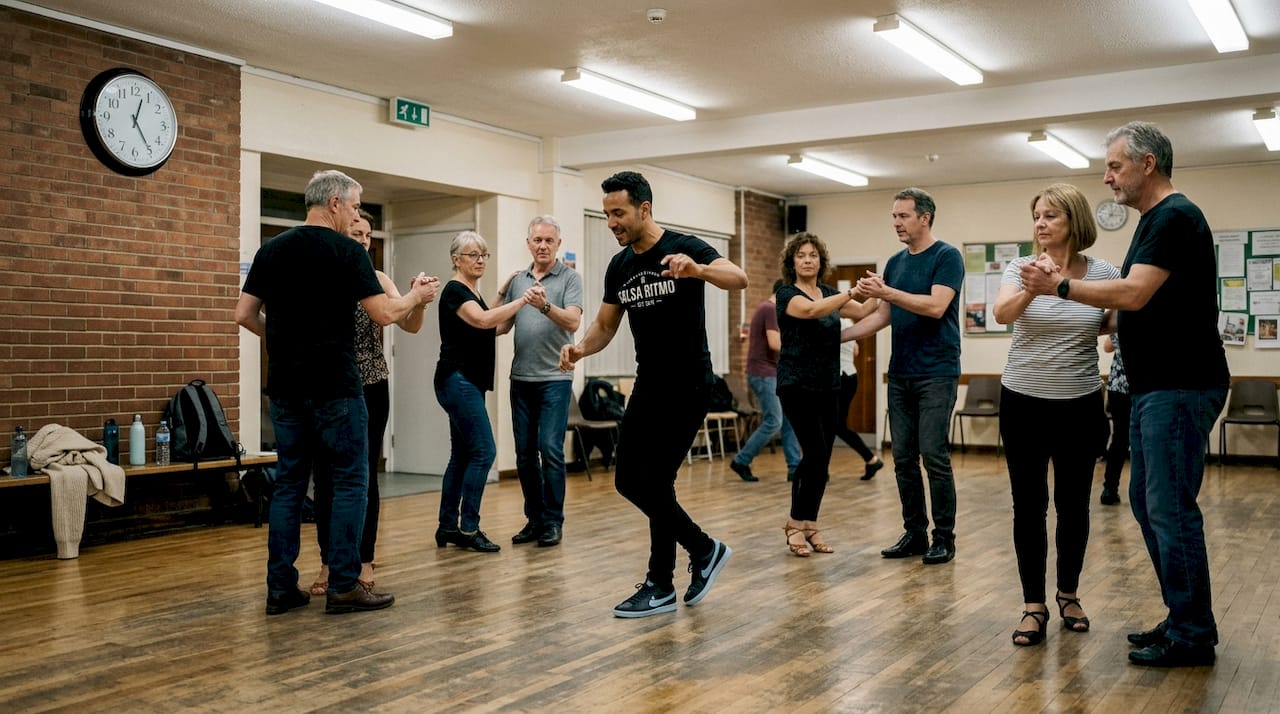
Pro Tip: Film a short clip of the rueda de casino segment. Guests love rewatching it, and it becomes a natural conversation starter and social media moment for your event.
Even with clear steps, every group hits a few snags. Here is how to keep things smooth and enjoyable for everyone involved.
The most common issue is stiff posture. Guests who are nervous tend to lock their knees and hold their breath. Remind them that Cuban salsa is a conversation, not a performance. Relaxed shoulders and a soft bend in the knees fix most posture problems instantly.
Overthinking the count is the second big trap. When people focus too hard on counting beats, they disconnect from the music and their partner. Encourage guests to hum or sing along to the track instead of counting silently. It sounds simple, but it works.
“Avoid stiff posture and rushing turns. Focus on natural movement and connection.” This principle from Cuban salsa technique applies to every skill level, from first-timers to experienced dancers.
Rushing through turns is especially common when guests get excited. Turns that happen too fast lose their shape and throw off the partner. Slow the music down by 10 to 15 percent during the turn practice phase if your sound system allows it.
Forgetting eye contact is a subtle but important issue. Cuban salsa is a social dance, and eye contact is part of the connection. Instructors who remind guests to look at each other rather than at their feet see a noticeable jump in group energy.
Pro Tip: Keep each practice segment under 8 minutes before switching activities. Short bursts of focused effort followed by encouragement and a laugh keep the group energized far longer than extended drills. Check out Cuban salsa lesson tips for more ideas on structuring your session.
After solving common issues, understanding progress milestones helps maintain group motivation. Setting realistic expectations also helps you plan follow-up sessions and celebrate wins along the way.
Here is what most groups can expect at different stages:
| Milestone | Timeframe | What guests can do |
|---|---|---|
| Basic movement | After 1 session | Step to the beat, feel the rhythm |
| Turns | After 1 to 2 weeks | Vacilala and coca-cola with a partner |
| Pattern recognition | After 1 month | String 2 to 3 moves together |
| Social confidence | After 6 to 8 weeks | Dance comfortably to most songs |
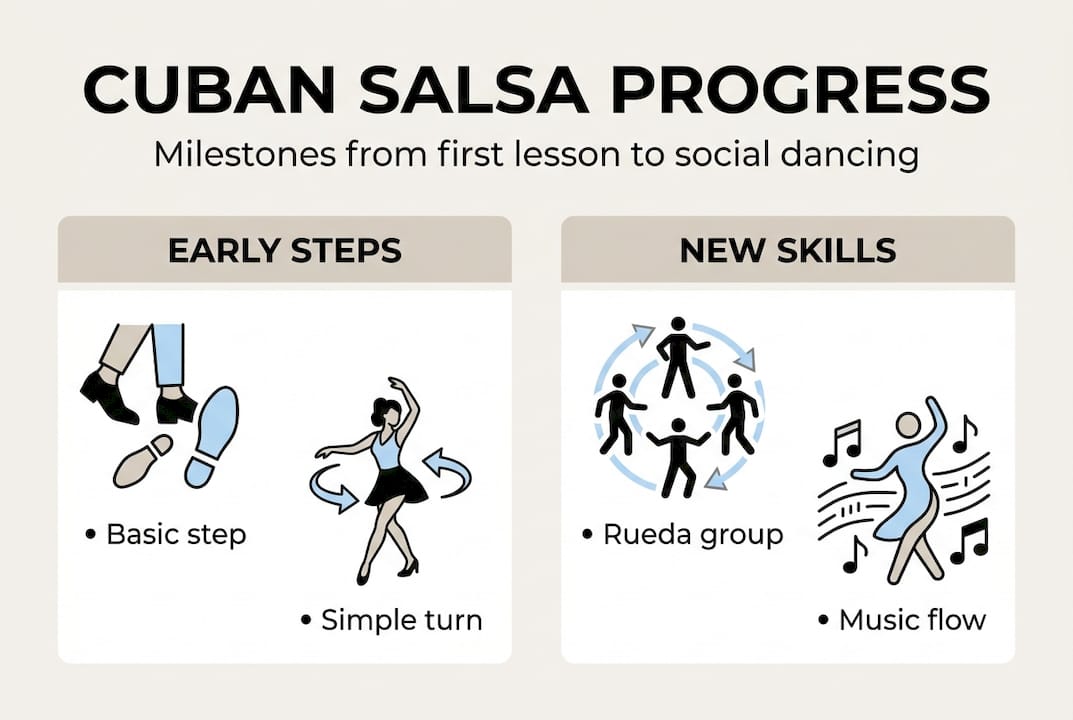
The data is encouraging. Social dance readiness typically arrives within 6 to 8 weeks for most beginners, while full mastery takes two or more years. For event purposes, that 6 to 8 week window is your target. A single well-run session plants the seed, and a short series of follow-up workshops gets your group to the social dance stage.
Statistic callout: Most beginners reach social dance readiness, meaning they can enjoy dancing to basic songs with a partner, within just 6 to 8 weeks of consistent, structured practice.
Short, consistent practice improves readiness rapidly, which is great news for event organizers who want to build on a single lesson. Even 10 minutes of review between sessions accelerates the group’s confidence noticeably.
Celebrate progress visibly. Share group videos in a WhatsApp group or event chat. Plan a follow-up session 2 to 3 weeks after the first one. Guests who see themselves improving stay motivated and bring friends to the next event.
Ready to add a memorable cultural experience to your next event? Castillo.Salsa brings authentic Cuban salsa directly to your venue in Wrocław, with instructors who know how to read a crowd and adapt the energy to your group.
Whether you are organizing a corporate team-building afternoon, a birthday celebration, a wedding reception, or a bachelorette party, the Cuban salsa event services are designed to fit your format and your guests. Every session blends cultural authenticity with structured participation so that even the most reluctant dancers end up on the floor. Browse the event photo gallery to see real groups in action and get a feel for the energy. Reach out directly to discuss a customized program that matches your event size, venue, and goals.
Most beginners are ready to participate and have fun after 1 to 2 guided lessons. Social readiness typically arrives within 6 to 8 weeks of regular practice, but enjoyment starts from the very first session.
No experience is needed at all. Lessons start with basic steps and rhythm, making them accessible to complete beginners who have never danced before.
Guests should wear comfortable, non-slip shoes with smooth soles and breathable clothing that allows free movement. Avoid rubber-soled sneakers or high heels, as both make turns difficult.
Partner rotation and rueda de casino are the two most effective tools for keeping everyone involved. Adding eye contact cues and group games keeps the energy social and fun throughout the session.
Article generated by BabyLoveGrowth
