
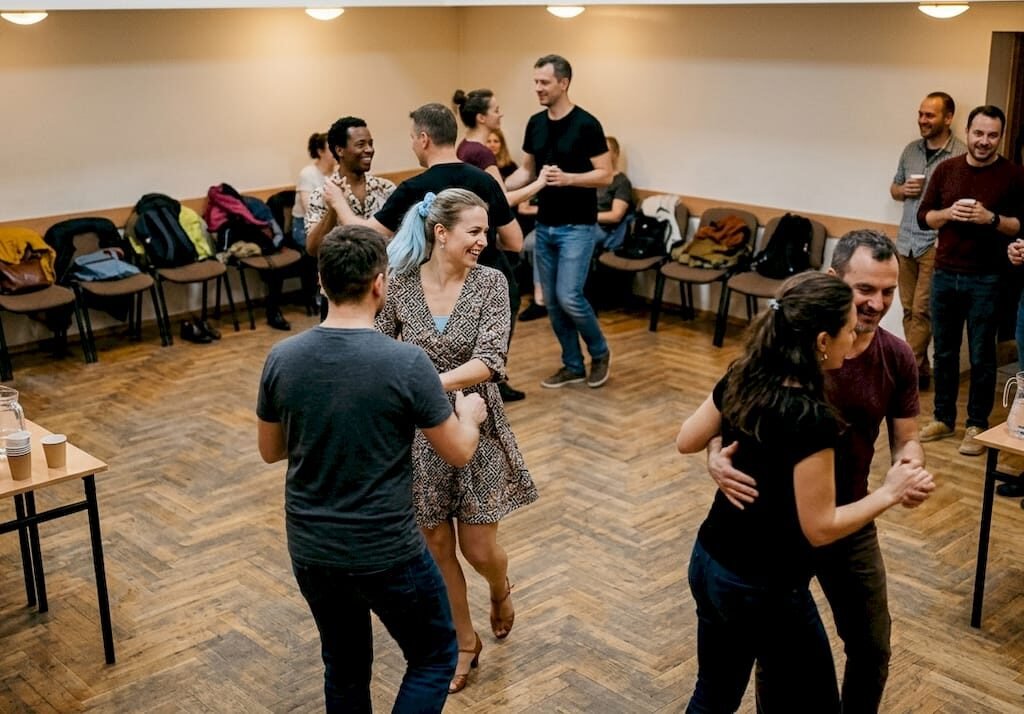
TL;DR:
- Cuban salsa with Rueda de Casino fosters communal energy and increases guest interaction at events.
- It is highly scalable, inclusive, and adaptable to various venues and audience sizes.
- Incorporating salsa enhances social bonding, creates memorable experiences, and boosts team cohesion.
Most people picture salsa as a spotlight moment, one dancer performing while everyone else watches. That picture misses the most exciting truth about Cuban salsa: it is designed to pull everyone in. Through its signature group format, Rueda de Casino, Cuban salsa creates a living circle of energy where guests switch partners, follow called moves, and share something genuinely communal. For event planners and private hosts in Wrocław, that means your wedding reception, birthday party, or corporate event can become an experience no one forgets.
Key Takeaways
| Point | Details |
|---|---|
| Transformative group activity | Cuban salsa energizes celebrations by connecting guests in dynamic group dances. |
| Flexible for any event | This salsa style fits both intimate gatherings and large corporate parties in Wrocław. |
| Community and team-building | Interactive salsa builds lasting bonds and boosts team spirit, making every event memorable. |
| Easy to integrate into planning | Event planners can seamlessly add Cuban salsa for entertainment and engagement. |
Why Cuban salsa stands out in social celebrations
Not all social dances are built for crowds. Most partner dances keep two people focused inward, disconnected from the larger room. Cuban salsa breaks that pattern entirely. Its circular group format brings people together across the floor, creating the kind of shared energy that elevates any celebration.
The icebreaker benefits of salsa are hard to match with any other activity. When guests step into a Rueda circle, they immediately interact with multiple people. Shyness dissolves fast. Even someone who has never danced in their life finds a role within minutes.
Here is what makes Cuban salsa uniquely powerful for events:
- Scalability: Group salsa participation can start with just two couples and grow to over a thousand dancers, fitting any event size.
- Inclusivity: No prior dance experience is needed. The caller guides everyone in real time.
- Atmosphere: Cuban rhythms are inherently festive, lifting the energy of the room without any extra effort from the host.
- Adaptability: The format works in ballrooms, garden venues, rooftop spaces, and corporate halls across Wrocław.
“Cuban salsa, particularly Rueda de Casino, fosters community and high energy through circular group dancing, making every participant feel like part of something bigger.”
Think about your last event where entertainment was passive. A DJ set while people stood at the edges. A band performing while guests politely nodded. Now compare that to a format where guests are the show. The difference is not just enjoyment but connection. People remember events where they did something together, not just watched.
Pro Tip: Book a short 20-minute Rueda intro session early in your event timeline. Getting guests on the floor before dinner removes the psychological barrier to dancing later in the evening.
The memorable salsa moments that stick with guests come from participation, not observation. When your aunt, your colleague, and your best friend are all laughing in the same circle, that is the memory that gets talked about for years.
The dynamics of Cuban salsa: group interaction and caller role
Understanding how a Rueda session actually works helps planners set expectations and design a better event flow. The key figure is the caller, a dancer who stands within or beside the circle and calls out move names while dancing along.
How the structure unfolds in practice:
- Dancers form a circle in pairs, facing their partners.
- The caller announces a move, and everyone executes it simultaneously.
- At certain calls, dancers rotate to a new partner, keeping the circle in constant motion.
- The energy builds as moves get faster and the group becomes more synchronized.
- Sessions can be paused, restarted, or adjusted in real time based on the crowd’s energy.
Caller-led dance technique also includes regional variations. Moves carry different names in Havana compared to Miami or Warsaw, and a skilled caller adapts accordingly. For loud venues, hand signals replace verbal cues so no one misses a beat.
| Feature | Traditional partner dance | Cuban salsa Rueda |
|---|---|---|
| Group size | 2 people | 2 couples to 1,000+ |
| Partner interaction | Fixed partner | Rotating partners |
| Leadership | Self-directed | Caller-led |
| Learning curve | Moderate to high | Low, guided in real time |
| Noise adaptability | Limited | High (hand signals) |
The caller role in salsa shows is what separates a polished event experience from a chaotic one. A skilled caller reads the room, adjusts tempo, simplifies moves for beginners, and keeps the energy high without losing anyone.
Pro Tip: For corporate events or mixed-skill groups, ask your salsa provider to use a bilingual caller (Polish and English) so every guest stays included regardless of language background.
The group salsa activity format is also forgiving. If someone misses a step, the circle keeps moving. That safety net is exactly what hesitant non-dancers need to feel comfortable joining in.
Real impact: How Cuban salsa transforms weddings, parties, and corporate events
Let’s look at what actually changes when you add Cuban salsa to a celebration. The outcomes are specific and measurable.
At weddings, salsa creates a shared activity that bridges the gap between the couple’s different social circles. Friends and family who have never met find themselves laughing in the same Rueda circle. That moment of connection, facilitated by the dance, often becomes the highlight guests mention in their cards and messages.
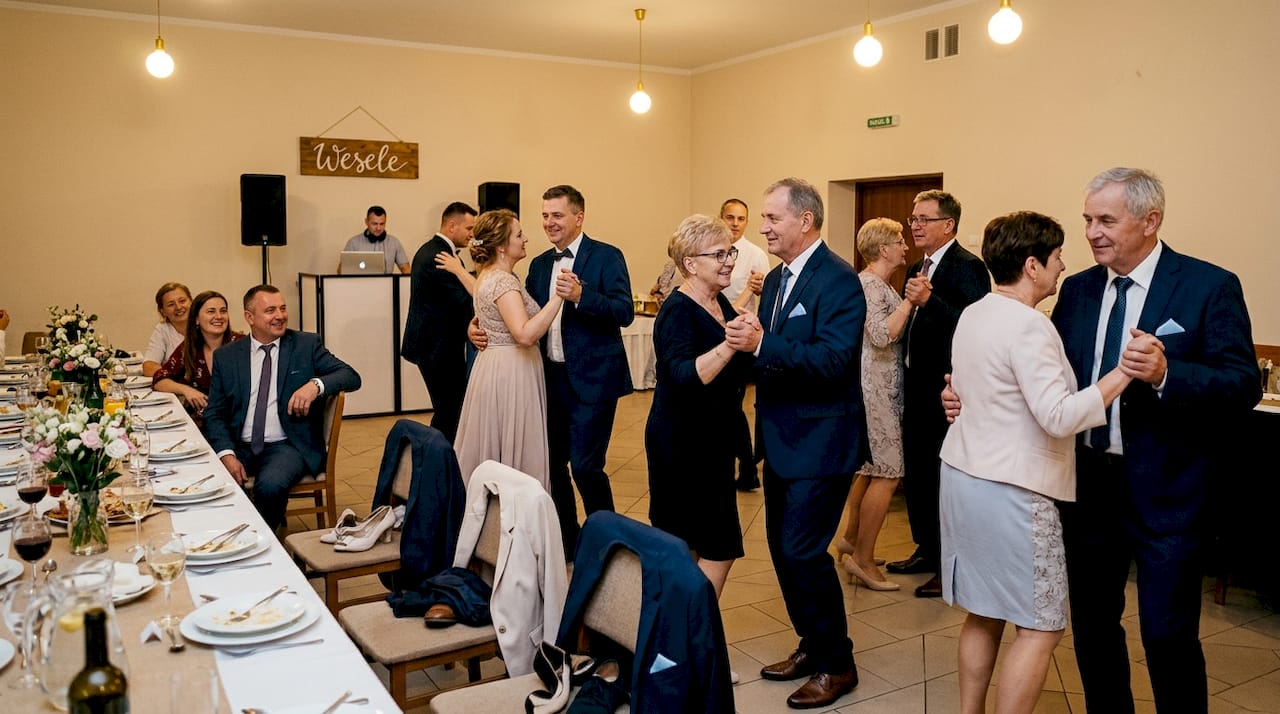
At private parties, the format replaces the awkward gap between dinner and open dancing. Instead of waiting for someone brave enough to start the dance floor, a structured Rueda session gets everyone moving at the same time.
At corporate events, the benefits go even further. Interactive Cuban salsa activities build collaboration, reduce hierarchy, and create shared memories across departments. When the CEO and the new intern are switching partners in the same circle, something real happens to team culture.
| Event type | Primary benefit | Recommended format |
|---|---|---|
| Wedding | Guest bonding across groups | 30-min Rueda workshop |
| Birthday party | High-energy fun, ice-breaking | 20-min intro + open dancing |
| Corporate event | Team cohesion, culture building | 45-min team-building session |
| Bachelor/bachelorette | Laughter, shared experience | Short performance + group lesson |
The scale potential is striking. The world record Rueda involved 1,102 dancers, proving this format can power large-scale engagement at any event size.
The salsa party steps that work best follow a clear arc: short performance to inspire, guided intro to include, then open Rueda for everyone to experience together.
For team-building salsa at corporate events, the impact extends beyond the night itself. Teams that share a playful, slightly vulnerable experience together tend to communicate more openly afterward.
- Guests who dance together report higher satisfaction with the overall event
- Interactive entertainment increases the perceived value of any celebration
- Rueda sessions require no special attire or preparation from guests
Integrating Cuban salsa in your celebration: Steps for event planners
Knowing the value is one thing. Executing it smoothly at your event in Wrocław is another. Here is a practical framework for getting it right.
- Choose experienced professionals. Look for instructors who have worked events, not just studio classes. Event crowds behave differently from students, and a caller who handles both is essential.
- Check your venue for space and sound. A clear 6×6 meter area is the minimum for a small Rueda circle. Sound quality matters for cues, so confirm speaker placement with your venue coordinator.
- Schedule strategically. The best placement for a Rueda session is after the meal but before open dancing, typically 60 to 90 minutes into the event.
- Brief your instructor on the crowd. Share the age range, any mobility considerations, and whether the group includes non-Polish speakers. Good instructors adjust their approach based on this input.
- Plan a short icebreaker before the Rueda. Two minutes of simple warm-up moves removes the fear of looking foolish and dramatically improves participation rates.
Group salsa adaptation for various venues and event formats is genuinely flexible, requiring only a caller and a minimum of two couples to get started.
Common pitfalls to avoid:
- Starting the session too early before guests have relaxed
- Scheduling the Rueda at the same time as speeches or toasts
- Assuming all guests will join spontaneously without any warm-up
- Booking an instructor without event-specific experience
Pro Tip: Ask your provider to organize salsa lessons in a tiered format: one round for pure beginners, one for those who pick it up fast. This keeps everyone engaged and prevents advanced guests from growing bored.
The goal of a well-run unforgettable salsa experience is not to turn your guests into dancers. It is to give them a moment of shared joy they did not expect.
The overlooked dimension: Why Cuban salsa is more than entertainment
Most event planning guides treat entertainment as a box to check. Choose music, book a band, done. What they miss is the difference between entertainment that happens to guests and an experience guests step into.
We have seen this difference play out at dozens of events in Wrocław. When guests become participants, the entire social dynamic of the room shifts. People who arrived as strangers leave with inside jokes and a shared story. That does not happen when everyone is watching the same screen or listening to the same playlist.
The advantages of salsa shows go well beyond the hour or two they occupy. They create the social glue that holds an event together in memory. Connection is the real product. The dancing is just the vehicle.
Conventional wisdom says hire great entertainment to impress guests. Our experience says: give guests a reason to turn toward each other, and the event takes care of itself.
Discover authentic Cuban salsa for your next Wrocław event
Castillo Salsa brings authentic Cuban salsa experiences to weddings, private parties, and corporate events across Wrocław. Whether you want an electrifying Cuban salsa event that wows guests from the start or a warm interactive session that turns strangers into friends, we tailor every experience to your event’s specific needs. From the first beat of music to the final Rueda circle, our professional team handles the energy, the logistics, and the fun. Explore our party workflow to see how a typical event unfolds, or dive into what makes our engaging salsa lessons work for any group size or skill level.
Frequently asked questions
How many people can participate in a Cuban salsa Rueda at a typical event?
A Rueda can involve as few as two couples or scale to over 1,000 dancers, making it a flexible choice for any event size in Wrocław.
What makes Cuban salsa different from other social dances?
Cuban salsa uses a circular group format with partner switches and caller-led moves, creating communal energy that most partner dances simply cannot match.
Can Cuban salsa work in noisy or unconventional venues?
Absolutely. Dancers rely on hand signals in loud venues rather than verbal cues, so the format adapts easily to outdoor spaces, rooftops, and busy event halls.
Do you need professional instructors to run a Cuban salsa activity?
Professional instructors are strongly recommended. The caller dances while leading and adapts moves to suit the group, which requires real event experience to do well.
How can Cuban salsa entertainment boost corporate team-building?
The Rueda format puts colleagues in constant interaction with rotating partners, and group cohesion through movement translates directly into stronger communication and team spirit after the event.
