
TL;DR:
- Ein geeigneter Veranstaltungsort, die richtige Ausrüstung und ansprechende Aktivitäten sorgen für eine lebendige kubanische Salsa-Veranstaltung.
- Ein strukturiertes Programm mit Unterricht, Showcase und Tanz hält die Gäste in Schwung und bei der Stange.
- Salsa-Veranstaltungen fördern den sozialen Zusammenhalt, die Integration und die kulturelle Erfahrung, was sie zu wertvollen Instrumenten der Gemeinschaft macht.
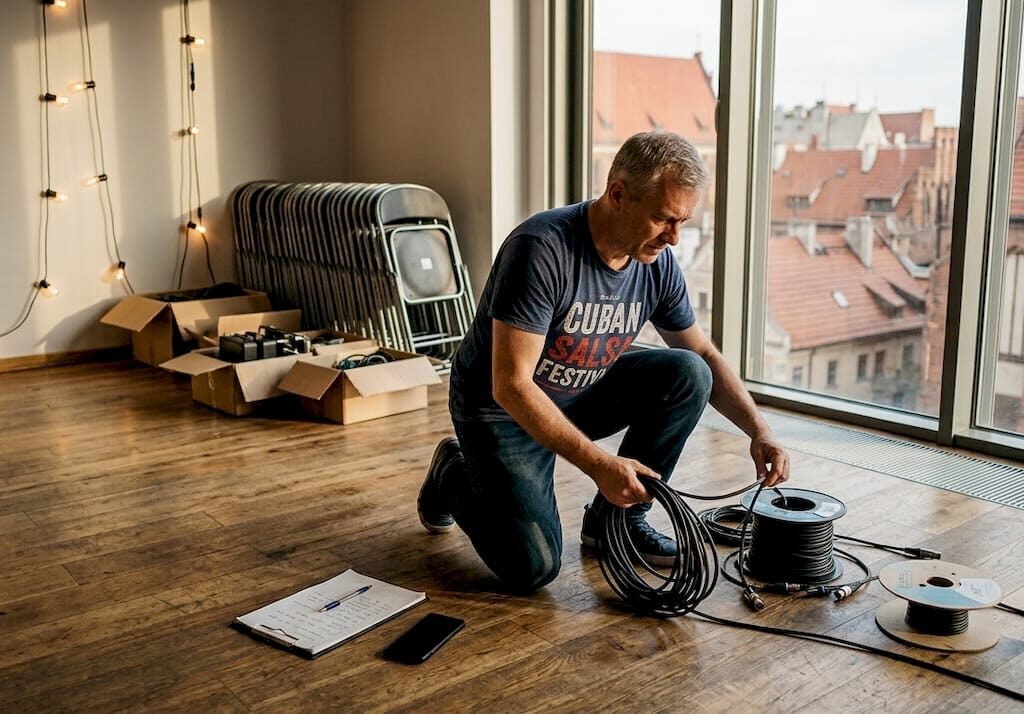
Die Planung einer kubanischen Salsa-Veranstaltung in Wrocław kann sich überwältigend anfühlen, vor allem, wenn Sie ohne tänzerischen Hintergrund oder kulturelle Verbindungen beginnen. Die gute Nachricht ist, dass Sie beides nicht brauchen. Was Sie brauchen, ist ein klarer Plan, die richtigen Partner und den aufrichtigen Wunsch, etwas zu schaffen, worüber die Leute noch lange nach dem letzten Lied sprechen werden. Dieser Leitfaden führt Sie durch alle Phasen, von der Suche nach einem geeigneten Veranstaltungsort und der Zusammenstellung des Programms bis hin zur Einbindung der Gäste und dem Umgang mit Überraschungen am Abend. Ganz gleich, ob Sie eine Firmenfeier, eine Geburtstagsfeier oder ein Gemeindetreffen organisieren, diese Schritte werden Ihnen helfen, es mit Zuversicht durchzuziehen.
Wichtigste Erkenntnisse
| Punkt | Einzelheiten |
|---|---|
| Beginnen Sie mit den Grundlagen | Der richtige Raum und die richtige Musik sind entscheidend für eine echte kubanische Salsa-Atmosphäre. |
| Struktur ist der Schlüssel zum Erfolg | Ein klarer Reiseplan sorgt für reibungslose Übergänge und hohe Gästeenergie. |
| Engagement ist alles | Interaktiver Unterricht und Gruppenaktivitäten sorgen dafür, dass jeder mitmacht, unabhängig von seinen Tanzkenntnissen. |
| Herausforderungen antizipieren | Sprechen Sie häufige Fallstricke frühzeitig an, damit Ihre Veranstaltung reibungslos verläuft und einen bleibenden Eindruck hinterlässt. |
Sammeln Sie das Nötigste: Raum, Ausrüstung und Mitarbeiter
Bevor Sie auch nur eine einzige Einladung verschicken, müssen Sie Ihre Räumlichkeiten festlegen. Der Veranstaltungsort gibt den Ton für alles andere an. Eine gute kubanische Salsa-Veranstaltung braucht eine Tanzfläche, die groß genug ist, damit sich die Gäste frei bewegen können, ohne aneinander zu stoßen. Als allgemeine Regel gilt: Planen Sie mindestens 2 Quadratmeter Bodenfläche pro Person auf der Tanzfläche zu Spitzenzeiten ein. Glatte Hartholz- oder Laminatböden eignen sich am besten. Vermeiden Sie Teppichböden oder unebene Flächen, da diese die Tänzer zum Stolpern bringen und die Stimmung schnell kippen können.
Die Atmosphäre ist ebenso wichtig wie die Fläche. Gedämpftes, warmes Licht schafft Intimität und Energie. Lichterketten, bernsteinfarbene oder rote Strahler und Kerzen auf den Tischen tragen zu dem typischen kubanischen Flair bei. Stellen Sie Sitzgelegenheiten am Rand auf, damit sich die Gäste ausruhen können, ohne das Geschehen zu verlassen. So zirkuliert die Energie im Raum.
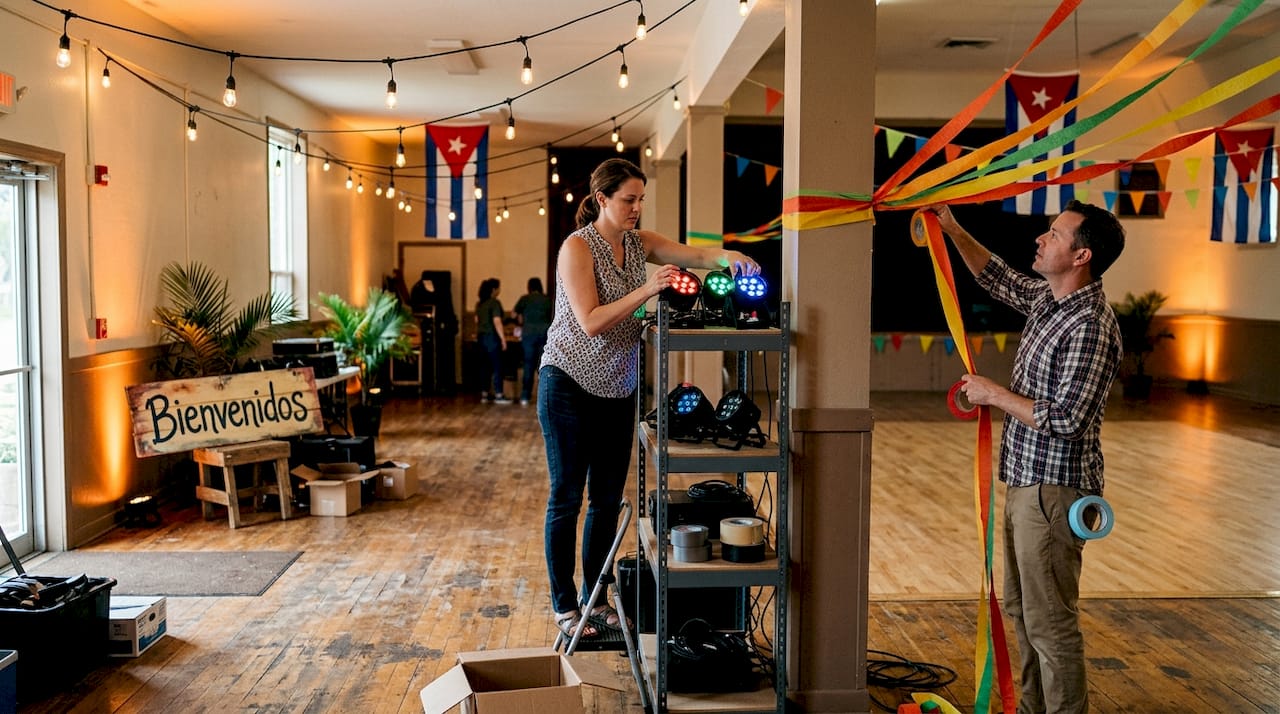
Ihr Soundsystem ist nicht verhandelbar. Dünner, blecherner Ton ruiniert selbst die beste Musik. Mieten Sie ein System mit genügend Leistung, um den Raum klar und ohne Verzerrungen zu beschallen. Kubanische Salsa besteht aus vielschichtigen Perkussions-, Bläser- und Gesangseinlagen, daher muss der Mix reichhaltig und warm sein. Arbeiten Sie mit einem DJ zusammen, der sich mit dem Genre auskennt, oder stellen Sie eine Wiedergabeliste zusammen, die im Laufe des Abends vom mittelschnellen Son Cubano zum schnelleren Timba übergeht.
Die Zusammenarbeit mit einem erfahrenen Ausbilder oder Darsteller ist eine der klügsten Entscheidungen, die Sie treffen können. Ideen für Lateinamerikanische Tanzveranstaltungen zeigen, dass ein geeigneter Veranstaltungsort und die richtige Ausrüstung den Grundstein für ein ansprechendes Erlebnis legen, aber es sind die Menschen, die den Raum leiten, die ihn zum Leben erwecken.
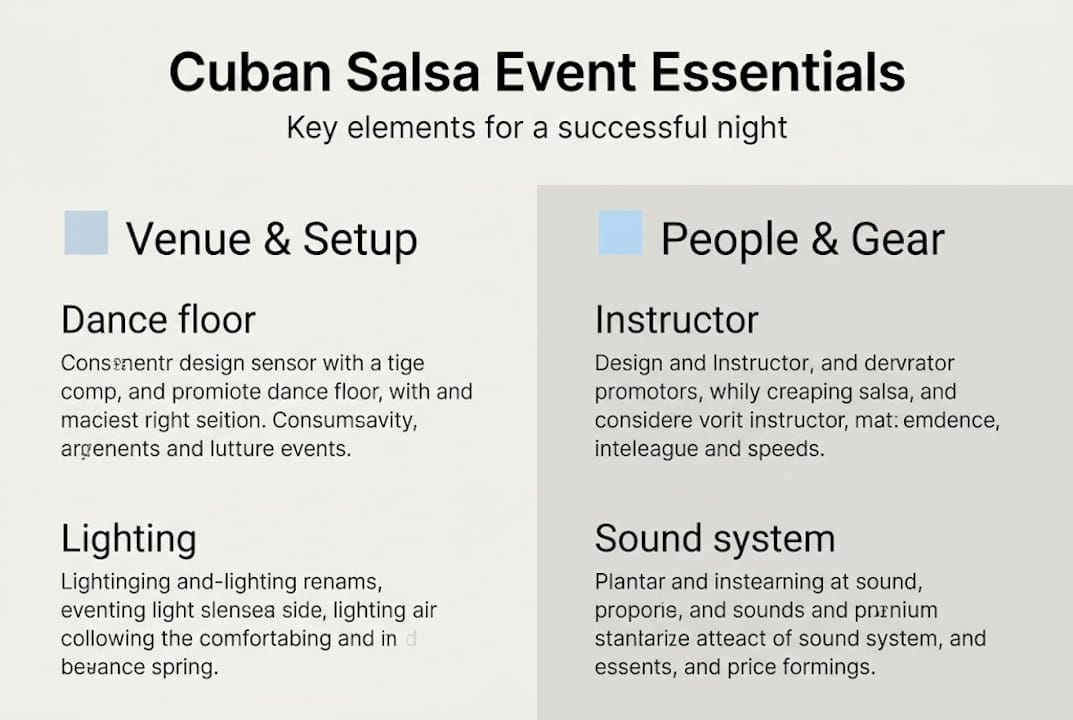
Checkliste für Veranstaltungsort, Personal und Ausrüstung
| Kategorie | Was Sie brauchen | Anmerkungen |
|---|---|---|
| Veranstaltungsort | Glatte Tanzfläche, min. 2m² pro Tänzer | Hartholz oder Laminat bevorzugt |
| Ton | PA-System, Subwoofer, Mischpult | Test vor Ankunft der Gäste |
| Musik | Kubanische Salsa-Playlist oder Live-DJ | Energie schrittweise aufbauen |
| Beleuchtung | Warme Strahler, Dimmer | Vermeiden Sie grelles weißes Licht |
| Personal | Ausbilder, MC, Veranstaltungskoordinator | Informieren Sie alle Beteiligten im Voraus |
| Dekor | Requisiten, Flaggen und Pflanzen mit kubanischem Thema | Lebendig, aber nicht überladen |
Must-haves für kubanisches Flair:
- Cocktails oder Mocktails auf Rumbasis an der Bar
- Kubanische oder lateinamerikanische Verpflegungsstationen
- Gedruckte oder digitale Liedwidmungen für Gäste
- Eine Willkommens-Playlist mit klassischen Son Cubano vor Beginn der Veranstaltung
- Vorschlag für die Kleiderordnung in der Einladung (helle Farben erwünscht)
Profi-Tipp: Platzieren Sie Ihren DJ oder Ihr Soundsystem am anderen Ende des Raums, weit weg vom Eingang. Das zieht die Gäste tiefer in den Raum und füllt die Tanzfläche auf natürliche Weise, wenn sie sich zur Musik bewegen.
Planen Sie jeden Schritt: Eine kubanische Salsa-Reiseroute erstellen
Sobald die wichtigsten Dinge besorgt sind, besteht die nächste große Aufgabe darin, den Ablauf Ihrer Veranstaltung zu planen. Ein gut getimter Ablauf unterscheidet eine vergessliche Party von einem unvergesslichen Erlebnis. Ohne Struktur erreicht die Energie zu früh ihren Höhepunkt oder die Gäste verlieren den Schwung und treiben in Richtung Ausgang.
A Arbeitsablauf einer kubanischen Salsa-Party bestätigt, dass die Organisation einer Salsa-Party reibungsloser verläuft, wenn man einem strukturierten Veranstaltungsablauf folgt. Hier ist ein Ablauf, der für Gruppen jeder Größe zuverlässig funktioniert:
- Ankunft und Begrüßung der Gäste (30 Minuten): Play background son cubano, offer welcome drinks, and let guests settle in naturally.
- Host introduction and cultural moment (10 min): Briefly explain what Cuban salsa is, its roots, and what guests can expect tonight. Keep it fun and light.
- Group warm-up lesson (20 to 30 min): A professional instructor leads everyone through basic steps. No experience needed.
- Professional showcase (15 min): A short performance by trained dancers raises the energy and inspires guests.
- Guided social dancing (45 min): Guests dance with instructor support. Games and partner rotations keep it active.
- Food and cultural break (20 to 30 min): Cuban-inspired food, music at lower volume, casual mingling.
- Free dancing and DJ set (60 to 90 min): Full energy, open floor, guests lead themselves.
- Closing moment (10 min): Group photo, final song, and a warm send-off.
Traditional vs. modern event flows
| Element | Traditional approach | Modern approach |
|---|---|---|
| Opening | Formal welcome speech | Short cultural intro with music |
| Lessons | Optional, late in program | Early, structured, and inclusive |
| Schaukasten | Central feature | Energy booster between segments |
| Free dancing | Entire second half | Woven throughout the evening |
| Cultural content | Minimal | Integrated into every segment |
Pro Tip: Keep transitions between segments under 3 minutes. Dead air kills momentum. Have your MC or instructor ready to fill any gap with a quick game or a fun fact about Cuban music culture.
Engage your guests: Activities, lessons, and interaction
With your agenda in place, you’ll want to ensure everyone feels included and energized. The biggest mistake organizers make is assuming guests will naturally jump in. Most people need a gentle push, and that’s where smart activity design comes in.
Cuban salsa lessons and group dynamics are proven icebreakers for diverse groups, regardless of age or background. The key is to make participation feel safe and fun rather than pressured.
Top interactive activities to include:
- Rueda de casino: A circular group dance where everyone follows one caller. Perfect for beginners and instantly creates a team feeling.
- Follow-the-leader warm-up: The instructor leads simple moves and guests mirror them. Low stakes, high laughs.
- Dance games: Musical chairs with salsa steps, freeze dancing, or a “best move” contest with audience voting.
- Partner rotation rounds: Guests switch partners every 3 to 4 minutes during guided segments.
- Mini challenges: Small groups compete to learn a short choreography in 5 minutes.
Schedule your professional showcase about 45 minutes into the event, after the group lesson. By that point, guests are warmed up and curious. Watching professionals perform right after trying the steps themselves creates a powerful “I want to do that” effect. Follow the showcase immediately with open dancing while the energy is at its peak.
“The moment a room full of strangers starts moving together in a rueda, something shifts. People stop being individuals at a party and become part of something shared. That’s the icebreaker effect no team-building exercise can replicate.”
For deeper guidance on structuring the learning portion of your event, the Prozess des kubanischen Salsaunterrichts offers a practical framework that keeps beginners comfortable and engaged. Understanding the Latin dance events impact on social bonding also helps you make the case to hesitant clients or guests.
Pro Tip: Rotate partners during guided segments, not just during free dancing. When guests dance with three or four different people in the first hour, the room feels warmer and more connected for the rest of the night.
Troubleshooting and event success: Common pitfalls and how to solve them
Even with great preparation, a few issues can crop up. Here’s how to keep everything on track.
Top 5 pitfalls and how to avoid them:
- Poor timing and overlong segments: Guests lose interest when any single activity runs past 30 to 35 minutes. Use a visible clock or a backstage timer and brief your MC to cut segments short if energy drops.
- Weak or distorted sound: Test your system at full volume before guests arrive. Bring a backup Bluetooth speaker as a last resort. Never assume the venue’s built-in system is adequate.
- Low engagement in the first 30 minutes: If guests are standing around, your warm-up isn’t working. Have your instructor pull three or four willing volunteers to the floor first. Others follow.
- Unclear instructions during lessons: Confusion kills confidence. Instructors should demonstrate every move before explaining it verbally. Show first, explain second.
- Overcrowding the dance floor: Too many people in too little space creates frustration. If your guest count grows, open a secondary area or stagger activities so not everyone is dancing at once.
Quick fixes and preventive tips:
- Assign a dedicated floor manager to monitor space and flow
- Print a simple one-page event schedule for staff and performers
- Have a backup song playlist ready if the DJ has technical issues
- Brief your instructor on the group’s background before the event starts
- Collect feedback cards or a quick digital survey at the end
Gathering feedback after the event is one of the most overlooked steps. Engagement and post-event feedback are crucial for repeat success, helping you refine timing, music selection, and activity choices for the next event. Even a five-question survey sent within 24 hours gives you actionable data.
Cultural hiccups happen too. If a guest feels uncomfortable with partner dancing, offer them a spot in a non-partner group activity like rueda observation or percussion play. Always have a graceful alternative ready so no one feels left out.
Why every community needs more Cuban salsa events
Here’s a perspective that most event guides skip entirely. Cuban salsa events are not just entertainment. They are one of the most effective tools for breaking down the invisible walls that form in Polish social settings, where people often stay in their own circles and rarely mix with strangers.
What we’ve seen repeatedly at events in Wrocław is that salsa does something no formal icebreaker game or networking exercise achieves. It puts people in physical proximity, gives them a shared goal, and removes the pressure of conversation. You don’t need to think of something clever to say. You just move.
The assumption that these events are only for experienced dancers or Latin culture insiders is simply wrong. The most electric events we’ve been part of involved groups where nobody knew a single step at the start. That shared vulnerability is actually the engine. When salsa schafft unvergessliche Momente for a group of strangers, it builds a kind of trust that takes months to develop in a typical office or neighborhood setting. Communities that dance together become more open, more connected, and frankly more fun to be part of.
Make your next Cuban salsa event unforgettable with expert support
If you’re ready to bring your Cuban salsa event to life, you don’t have to go it alone. Castillo Salsa works with event organizers and private hosts across Wrocław to design experiences that feel authentic, run smoothly, and leave guests genuinely energized. Whether you need a full event concept or just want to understand Cuban salsa event magic before your first booking, the team is ready to help. From professional instructors and performers to a proven Cuban salsa party workflow built specifically for Polish audiences, every detail is covered. Reach out to start planning an event your guests will genuinely remember.
Häufig gestellte Fragen
What is the ideal group size for a Cuban salsa event?
A group of 20 to 50 people lets everyone interact and still leaves room to dance comfortably. Latin dance events thrive with medium-sized groups that allow for easy interaction and spontaneous connections.
Do I need professional dancers at my salsa event?
No, but hiring an instructor or pro dancer can boost engagement and confidence for beginners. Professional instructors elevate event engagement and make salsa accessible for all newcomers.
What’s the best way to keep guests engaged all night?
Mix group activities, ensure upbeat music, and change partners or groups frequently. Group activities and frequent interaction are proven guest engagement methods that sustain energy across the full event.
How do I create an authentic Cuban atmosphere?
Focus on lively music, rich decorations, and a welcoming, playful energy. Cultural authenticity is best achieved through music, ambiance, and enthusiastic hosts who set the tone from the first moment.
What if guests have never danced salsa before?
Offer a simple group lesson at the start, focusing on basic steps and fun partner interaction. Introductory lessons make salsa events accessible and inclusive, ensuring no one feels left behind.
