
TL;DR:
- Un lugar adecuado, equipamiento y actividades atractivas crean un animado evento de salsa cubana.
- Un itinerario estructurado con lecciones, exhibiciones y bailes mantiene a los invitados llenos de energía e implicados.
- Los eventos de salsa fomentan los lazos sociales, la inclusión y la experiencia cultural, lo que los convierte en valiosas herramientas comunitarias.
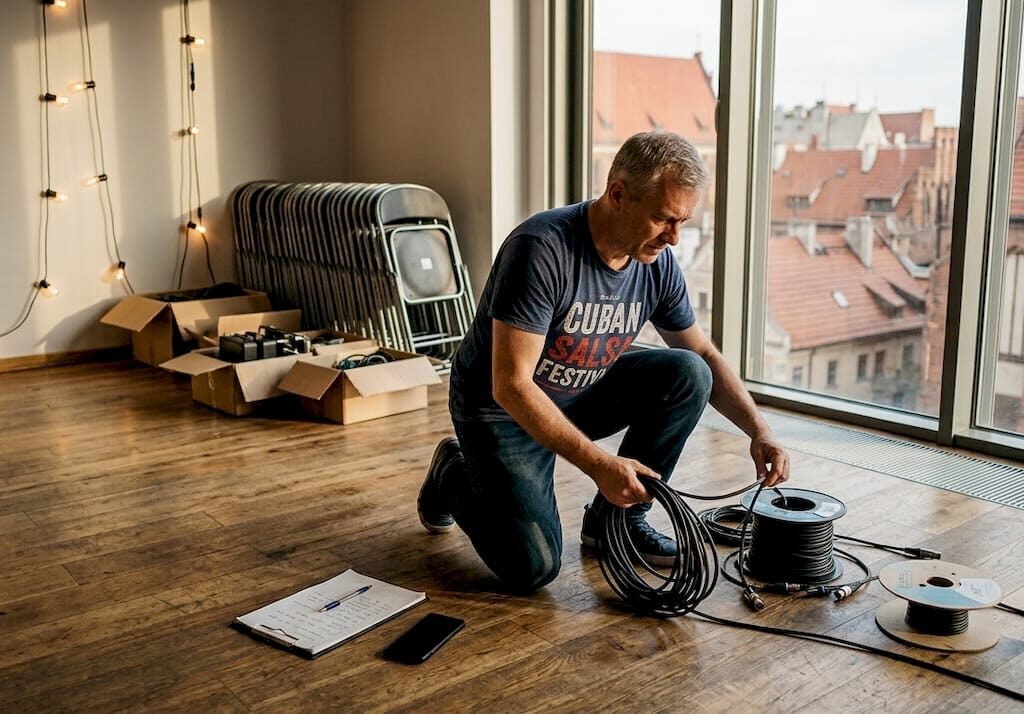
Planificar un evento de salsa cubana en Wrocław puede resultar abrumador, sobre todo si empiezas sin conocimientos de baile ni conexiones culturales. La buena noticia es que no necesitas ninguna de las dos cosas. Lo que necesitas es un plan claro, los socios adecuados y un deseo genuino de crear algo de lo que la gente hable mucho después de que termine la última canción. Esta guía le guiará en todas las etapas, desde la reserva del local y la elaboración del itinerario hasta la participación de los invitados y la gestión de las sorpresas de la noche. Si estás organizando una fiesta de empresa, una celebración de cumpleaños o una reunión comunitaria, estos pasos te ayudarán a conseguirlo con confianza.
Principales conclusiones
| Punto | Detalles |
|---|---|
| Empezar por lo básico | Conseguir el espacio y la música adecuados es fundamental para conseguir un auténtico ambiente de salsa cubana. |
| La estructura impulsa el éxito | Un itinerario claro garantiza transiciones fluidas y una gran energía de los invitados. |
| El compromiso lo es todo | Las clases interactivas y las actividades en grupo hacen que todos participen, independientemente de su nivel de baile. |
| Anticiparse a los retos | Aborde los problemas más comunes con antelación para que su evento se desarrolle sin problemas y deje una impresión duradera. |
Reúna lo esencial: Espacio, material y colaboradores
Antes de enviar una sola invitación, tienes que fijar el lugar de celebración. El lugar de celebración marca la pauta para todo lo demás. Un buen evento de salsa cubana necesita una pista de baile lo suficientemente grande como para que los invitados puedan moverse libremente sin chocarse. Como regla general, planifica al menos 2 metros cuadrados de espacio por persona en la pista de baile en las horas punta. Lo mejor es un suelo de madera lisa o laminada. Evita las moquetas o las superficies irregulares, que pueden hacer tropezar a los bailarines y acabar rápidamente con el ambiente.
La atmósfera es tan importante como la superficie. Una iluminación tenue y cálida crea intimidad y energía. Las luces de cuerda, los focos de colores en ámbar o rojo y las velas en las mesas contribuyen a crear ese ambiente cubano tan característico. Coloca los asientos alrededor del perímetro para que los invitados puedan descansar sin alejarse de la acción. De este modo, la energía circula por la sala.
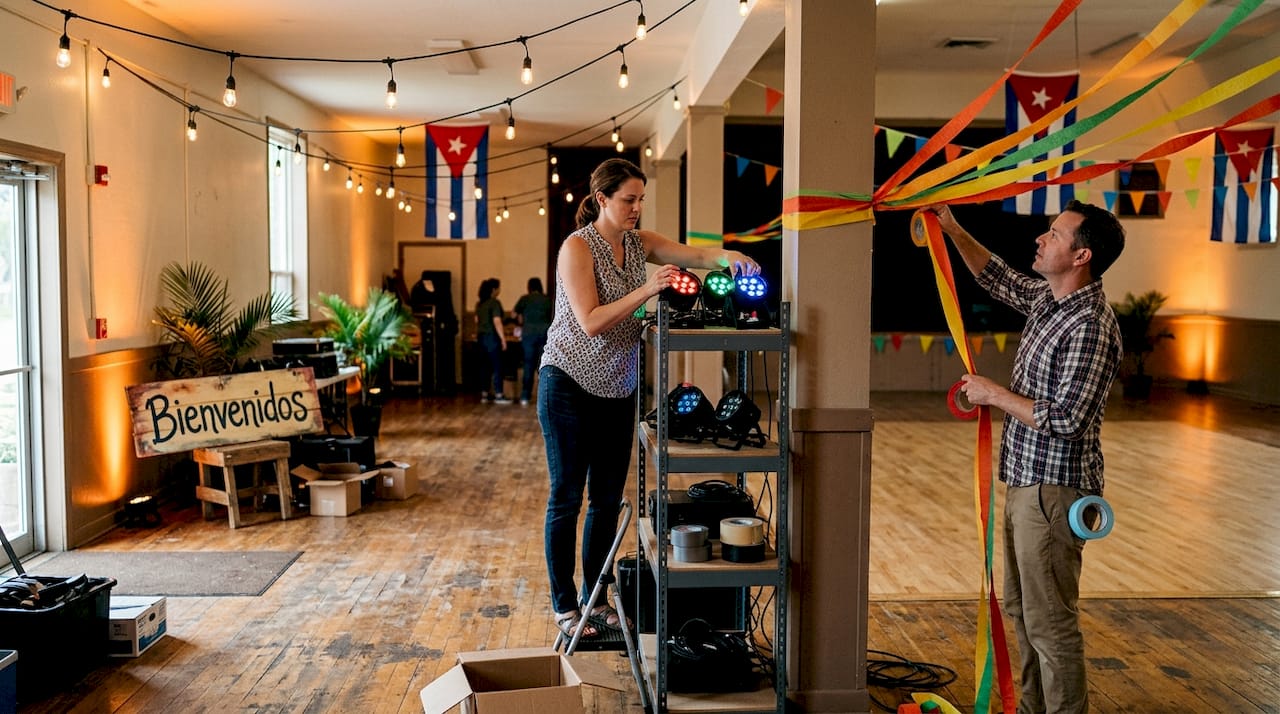
El sistema de sonido no es negociable. Un sonido débil y metálico arruina hasta la mejor música. Alquila o contrata un sistema con potencia suficiente para llenar la sala con claridad y sin distorsiones. La salsa cubana se basa en capas de percusión, metales y voces, por lo que la mezcla debe ser rica y cálida. Trabaja con un DJ que conozca el género o prepara una lista de reproducción que pase del son cubano a medio tempo a una timba más rápida a medida que avance la noche.
Asociarse con un instructor o artista experimentado es una de las decisiones más inteligentes que puede tomar. Ideas para eventos de baile latino demuestran que un lugar adecuado y un equipo apropiado sientan las bases para una experiencia atractiva, pero son las personas que dirigen la sala las que le dan vida.
Lista de control del lugar, el personal y el equipo
| Categoría | Lo que necesita | Notas |
|---|---|---|
| Lugar | Pista de baile lisa, mín. 2 m² por bailarín | Preferiblemente madera dura o laminada |
| Sonido | Megafonía, subwoofer, mezclador | Pruebe antes de que lleguen los invitados |
| Música | Lista de reproducción de salsa cubana o DJ en directo | Generar energía gradualmente |
| Iluminación | Focos cálidos, reguladores | Evite las luces blancas intensas |
| Personal | Instructor, maestro de ceremonias, coordinador de eventos | Informe a todos de antemano |
| Decoración | Atrezzo de temática cubana, banderas, plantas | Que sea vibrante pero no recargado |
Imprescindibles para un ambiente cubano:
- Cócteles o mocktails a base de ron en el bar
- Estaciones de comida cubana o latinoamericana
- Dedicatorias impresas o digitales para los invitados
- Una lista de reproducción de clásicos del son cubano antes de que comience el acto
- Sugerencia de código de vestimenta en la invitación (se recomienda el uso de colores vivos)
Consejo profesional: Coloca el DJ o el equipo de sonido en el extremo de la sala más alejado de la entrada. De este modo, los invitados se adentrarán en el espacio y llenarán la pista de baile de forma natural a medida que se acerquen a la música.
Planifique cada paso: Crear un itinerario de salsa cubana
Una vez asegurados los elementos esenciales, la siguiente gran tarea es planificar el desarrollo del evento. Un itinerario bien programado es lo que diferencia una fiesta olvidable de una experiencia inolvidable. Sin una estructura, la energía alcanza su punto álgido demasiado pronto o los invitados pierden el ritmo y se dirigen hacia las salidas.
A Salsa cubana confirma que organizar una fiesta de salsa es más fácil si se sigue un flujo de trabajo estructurado. He aquí una secuencia que funciona de forma fiable para grupos de todos los tamaños:
- Llegada y bienvenida de los invitados (30 min): Ponga son cubano de fondo, ofrezca bebidas de bienvenida y deje que los invitados se acomoden con naturalidad.
- Presentación del anfitrión y momento cultural (10 min): Explique brevemente qué salsa cubana sus raíces y lo que los invitados pueden esperar esta noche. Que sea divertido y ligero.
- Clase de calentamiento en grupo (de 20 a 30 minutos): Un instructor profesional guía a todos por los pasos básicos. No se necesita experiencia.
- Escaparate profesional (15 min): Una breve actuación de bailarines entrenados eleva la energía e inspira a los invitados.
- Baile social guiado (45 min): Los invitados bailan con el apoyo de un instructor. Los juegos y las rotaciones de pareja mantienen la actividad.
- Comida y pausa cultural (de 20 a 30 minutos): Comida de inspiración cubana, música a bajo volumen, ambiente informal.
- Baile libre y DJ set (60 a 90 min): Plena energía, planta abierta, los invitados se guían a sí mismos.
- Momento de clausura (10 min): Foto de grupo, canción final y cálida despedida.
Flujos de eventos tradicionales frente a modernos
| Elemento | Enfoque tradicional | Enfoque moderno |
|---|---|---|
| Apertura | Discurso formal de bienvenida | Breve introducción cultural con música |
| Lecciones | Opcional, al final del programa | Temprana, estructurada e inclusiva |
| Escaparate | Característica central | Refuerzo de energía entre segmentos |
| Baile libre | Todo el segundo tiempo | Durante toda la velada |
| Contenidos culturales | Mínimo | Integrado en todos los segmentos |
Consejo profesional: Mantén las transiciones entre segmentos por debajo de los 3 minutos. El aire muerto mata el ímpetu. Ten a tu maestro de ceremonias o instructor preparado para llenar cualquier vacío con un juego rápido o un dato divertido sobre la cultura musical cubana.
Atraiga a sus invitados: Actividades, lecciones e interacción
Una vez establecida la agenda, deberá asegurarse de que todo el mundo se sienta incluido y animado. El mayor error que cometen los organizadores es dar por sentado que los invitados se implicarán de forma natural. La mayoría de la gente necesita un empujoncito, y ahí es donde entra en juego el diseño inteligente de las actividades.
Clases de salsa cubana y dinámicas de grupo son rompehielos de eficacia probada para grupos diversos, independientemente de su edad o procedencia. La clave está en hacer que la participación se sienta segura y divertida en lugar de presionada.
Las mejores actividades interactivas:
- Rueda de casino: Un baile circular en grupo en el que todos siguen a un llamador. Perfecto para principiantes y crea al instante un sentimiento de equipo.
- Calentamiento siguiendo al líder: El instructor dirige movimientos sencillos y los invitados los imitan. Poco en juego, muchas risas.
- Juegos de baile: Sillas musicales con pasos de salsa, baile congelado o un concurso de “mejor movimiento” con votación del público.
- Rondas de rotación de parejas: Los participantes cambian de pareja cada 3 ó 4 minutos durante los segmentos guiados.
- Mini desafíos: Pequeños grupos compiten para aprender una breve coreografía en 5 minutos.
Programe su presentación profesional para unos 45 minutos después de la clase en grupo. En ese momento, los invitados ya habrán calentado motores y sentirán curiosidad. Ver actuar a profesionales justo después de haber probado los pasos crea un poderoso efecto de “quiero hacerlo”. Inmediatamente después de la exhibición, organice un baile abierto mientras la energía está en su punto álgido.
“En el momento en que una sala llena de desconocidos empieza a moverse en rueda, algo cambia. Las personas dejan de ser individuos en una fiesta y pasan a formar parte de algo compartido. Ese es el efecto rompehielos que ningún ejercicio de creación de equipos puede reproducir”.”
Si desea una orientación más detallada sobre la estructuración de la parte didáctica de su acto, el Proceso de la lección de salsa cubana ofrece un marco práctico que mantiene a los principiantes cómodos y comprometidos. Comprender el Impacto de los eventos de bailes latinos en las redes sociales también te ayuda a convencer a clientes o invitados indecisos.
Consejo profesional: Rota de pareja durante los segmentos guiados, no sólo durante el baile libre. Cuando los invitados bailan con tres o cuatro personas diferentes en la primera hora, la sala se siente más cálida y conectada durante el resto de la noche.
Resolución de problemas y éxito del evento: Escollos comunes y cómo resolverlos
Incluso con una buena preparación, pueden surgir algunos problemas. He aquí cómo mantenerlo todo en orden.
Las 5 principales trampas y cómo evitarlas:
- Mal ritmo y segmentos demasiado largos: Los invitados pierden interés cuando una sola actividad dura más de 30 ó 35 minutos. Utilice un reloj visible o un cronómetro entre bastidores e informe a su presentador para que acorte los segmentos si la energía decae.
- Sonido débil o distorsionado: Prueba el sistema a todo volumen antes de que lleguen los invitados. Lleva un altavoz Bluetooth de reserva como último recurso. Nunca des por sentado que el sistema integrado del local es adecuado.
- Poco compromiso en los primeros 30 minutos: Si los invitados se quedan parados, el calentamiento no está funcionando. Pide a tu instructor que saque primero a la pista a tres o cuatro voluntarios dispuestos. Los demás les seguirán.
- Instrucciones poco claras durante las clases: La confusión mata la confianza. Los instructores deben demostrar cada movimiento antes de explicarlo verbalmente. Primero mostrar, luego explicar.
- Abarrotando la pista de baile: Demasiada gente en poco espacio crea frustración. Si aumenta el número de invitados, abre una zona secundaria o escalona las actividades para que no todo el mundo baile a la vez.
Soluciones rápidas y consejos preventivos:
- Asignar un responsable de planta para supervisar el espacio y el flujo
- Imprima un sencillo programa de eventos de una página para el personal y los artistas
- Ten preparada una lista de canciones de reserva por si el DJ tiene problemas técnicos
- Informe a su instructor sobre los antecedentes del grupo antes de que comience el acto.
- Recoger tarjetas de opinión o una encuesta digital rápida al final
Uno de los pasos que más se pasan por alto es la recopilación de opiniones tras el acto. Participación y comentarios tras el evento son cruciales para repetir el éxito, ya que le ayudan a perfeccionar el horario, la selección musical y la elección de actividades para el próximo evento. Incluso una encuesta de cinco preguntas enviada en un plazo de 24 horas le proporciona datos procesables.
Los contratiempos culturales también ocurren. Si un invitado se siente incómodo bailando en pareja, ofrécele un lugar en una actividad de grupo sin pareja, como la observación de ruedas o el juego de percusión. Ten siempre preparada una alternativa elegante para que nadie se sienta excluido.
Por qué todas las comunidades necesitan más eventos de salsa cubana
He aquí una perspectiva que la mayoría de las guías de eventos omiten por completo. Los eventos de salsa cubana no son sólo entretenimiento. Son una de las herramientas más eficaces para derribar los muros invisibles que se forman en los entornos sociales polacos, donde la gente suele permanecer en sus propios círculos y rara vez se mezcla con extraños.
Lo que hemos visto repetidamente en los eventos de Wrocław es que la salsa hace algo que ningún juego formal para romper el hielo o ejercicio de networking consigue. Pone a la gente en proximidad física, les da un objetivo común y elimina la presión de la conversación. No hace falta pensar en algo inteligente que decir. Basta con moverse.
La suposición de que estos eventos son sólo para bailarines experimentados o conocedores de la cultura latina es sencillamente errónea. En los eventos más eléctricos en los que hemos participado había grupos en los que nadie sabía un solo paso al principio. Esa vulnerabilidad compartida es en realidad el motor. Cuando la salsa crea momentos inolvidables para un grupo de desconocidos, crea un tipo de confianza que tarda meses en desarrollarse en un entorno típico de oficina o vecindario. Las comunidades que bailan juntas son más abiertas, están más conectadas y, francamente, es más divertido formar parte de ellas.
Haga que su próximo evento de salsa cubana sea inolvidable con la ayuda de expertos
Si estás listo para dar vida a tu evento de salsa cubana, no tienes que hacerlo solo. Castillo Salsa trabaja con organizadores de eventos y anfitriones privados en todo Wrocław para diseñar experiencias que se sientan auténticas, se desarrollen sin problemas y dejen a los invitados genuinamente energizados. Tanto si necesitas un concepto de evento completo como si sólo quieres entender la magia de los eventos de salsa cubana antes de tu primera reserva, el equipo está preparado para ayudarte. Desde instructores y artistas profesionales hasta un flujo de trabajo probado para fiestas de salsa cubana creado específicamente para el público polaco, cada detalle está cubierto. Ponte en contacto con nosotros para empezar a planificar un evento que tus invitados recordarán de verdad.
Preguntas más frecuentes
¿Cuál es el tamaño ideal de un grupo para un evento de salsa cubana?
Un grupo de 20 a 50 personas permite que todos interactúen y deja espacio para bailar cómodamente. Los eventos de bailes latinos prosperan con grupos de tamaño medio que permiten una interacción fácil y conexiones espontáneas.
¿Necesito bailarines profesionales en mi evento de salsa?
No, pero contratar a un instructor o bailarín profesional puede aumentar la participación y la confianza de los principiantes. Los instructores profesionales aumentan la participación en el evento y hacen que la salsa sea accesible para todos los principiantes.
¿Cuál es la mejor manera de mantener a los invitados atentos toda la noche?
Mezcle actividades de grupo, asegúrese de que la música sea alegre y cambie de pareja o de grupo con frecuencia. Las actividades en grupo y la interacción frecuente son métodos de probada eficacia que mantienen la energía durante todo el evento.
¿Cómo puedo crear un auténtico ambiente cubano?
Concéntrese en una música animada, una decoración rica y una energía acogedora y lúdica. La autenticidad cultural se consigue mejor a través de la música, el ambiente y unos anfitriones entusiastas que marcan la pauta desde el primer momento.
¿Y si los invitados nunca han bailado salsa?
Ofrece una sencilla clase en grupo al principio, centrada en los pasos básicos y en una divertida interacción con la pareja. Las clases introductorias hacen que los eventos de salsa sean accesibles e inclusivos, garantizando que nadie se sienta excluido.
