
TL;DR:
- Ustrukturyzowane imprezy salsowe wykorzystują choreografię ruchów, wodzireja i synchronizację grupową w celu zaangażowania.
- Wydarzenia te promują integrację społeczną, bogactwo kulturowe i pewność siebie na wszystkich poziomach umiejętności.
- Odpowiednie planowanie, wykwalifikowany rozmówca i autentyczna muzyka są kluczem do udanych kubańskich doświadczeń salsowych.
Większość ludzi wyobraża sobie imprezy salsowe jako luźno zorganizowane imprezy taneczne, na których goście mieszają się, popijają drinki i być może tasują się na parkiecie, gdy gra dobra piosenka. Ten obraz jest niepełny. Rueda de Casino, Salsa, jedna z najbardziej znanych form kubańskiej salsy, to rygorystycznie zorganizowany taniec grupowy oparty na zsynchronizowanych ruchach, wyznaczonym prowadzącym i głębokich korzeniach kulturowych. Ustrukturyzowane imprezy salsowe to zupełnie inne zwierzę, a kiedy zrozumiesz, jak działają, nigdy nie spojrzysz na wieczór taneczny w ten sam sposób. Niniejszy przewodnik omawia każdy element, który musisz znać i pokazuje, jak ożywić taką imprezę w Polsce.
Kluczowe wnioski
| Punkt | Szczegóły |
|---|---|
| Przejrzysta struktura zwiększa zaangażowanie | Zaplanowane formaty i przywództwo przekształcają imprezy salsowe z przypadkowych w niezapomniane przeżycia grupowe. |
| Kubańskie korzenie dodają autentyczności | Włączenie tradycyjnych ruchów i muzyki zachęca do kulturowego połączenia i ekscytacji. |
| Dostępne dla wszystkich poziomów | Ustrukturyzowane formaty salsy, takie jak Rueda de Casino, są mile widziane zarówno dla początkujących, jak i ekspertów. |
| Praktyczne dla polskich wydarzeń | Wskazówki krok po kroku pomogą ci wnieść autentyczną kubańską magię salsy do lokalnych uroczystości. |
Co definiuje zorganizowane wydarzenie salsowe?
Różnica między swobodnym wieczorem salsy a zorganizowanym wydarzeniem salsowym nie polega tylko na formalności. Chodzi o intencjonalność. Niezobowiązująca noc daje ludziom parkiet i playlistę. Ustrukturyzowane wydarzenie daje im wspólne doświadczenie z wyraźnym łukiem, liderem i zestawem ruchów, których wszyscy uczą się razem w czasie rzeczywistym.
Zorganizowane wydarzenia salsowe są zbudowane wokół trzech definiujących cech. Po pierwsze, istnieją choreografie ruchów, które uczestnicy wykonują razem. Po drugie, caller prowadzi grupę, wykrzykując polecenia, zwykle w języku hiszpańskim, które sygnalizują, który ruch będzie następny. Po trzecie, cała grupa tańczy synchronicznie, tworząc wizualny i społeczny spektakl, którego żaden parkiet freestyle'owy nie jest w stanie powtórzyć.
Oto szybkie porównanie, które pozwoli skonkretyzować to rozróżnienie:
| Cecha | Niezobowiązująca impreza salsowa | Zorganizowane wydarzenie salsowe |
|---|---|---|
| Przywództwo | DJ lub gospodarz | Wyznaczony rozmówca |
| Format tańca | Pary w stylu dowolnym | Koło z przełącznikami partnerów |
| Poziom uczestnictwa | Opcjonalnie | Zachęcamy wszystkich |
| Głębia kulturowa | Muzyka w tle | Aktywna kubańska tradycja |
| Zaangażowanie gości | Pasywny lub samodzielny | Prowadzony i interaktywny |
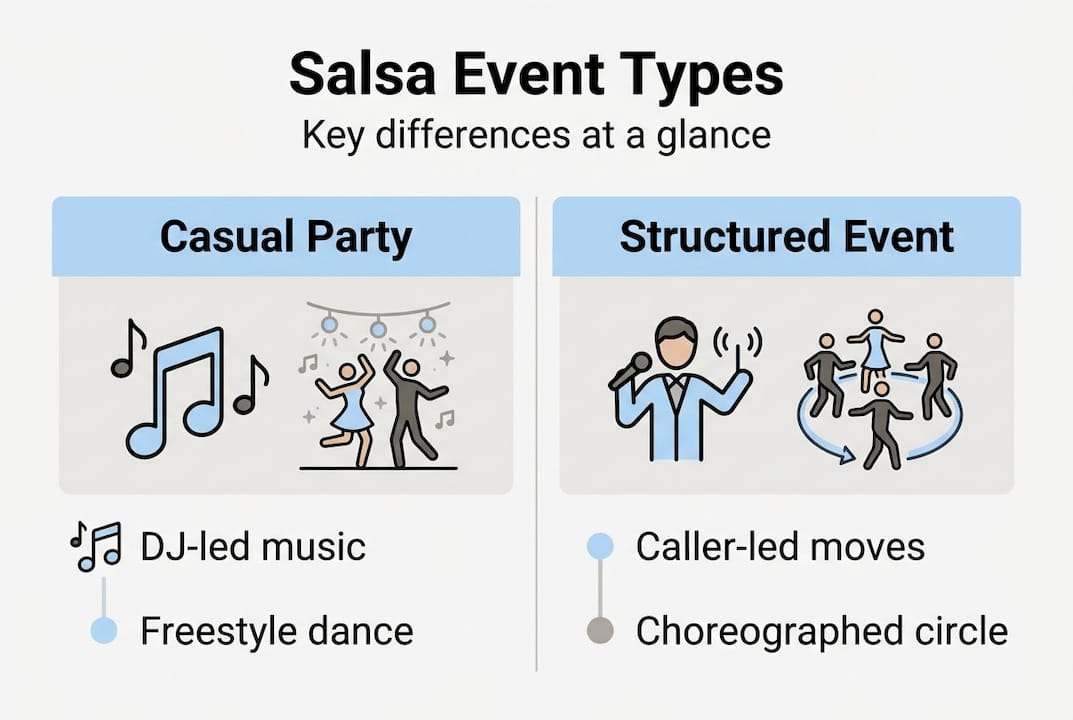
Formatem najbardziej kojarzonym z salsą zorganizowaną jest Rueda de Casino. Wymaga ona konferansjera, ustalonych ruchów i zsynchronizowanego tańca w kole, w przeciwieństwie do imprez free-form, gdzie każda para tańczy niezależnie. Prowadzący improwizuje sekwencję ruchów, co oznacza, że żadne dwie sesje Ruedy nie są identyczne. Ta spontaniczność w strukturze jest dokładnie tym, co czyni ją tak fascynującą.
Dlaczego struktura zwiększa zaangażowanie?
- Goście, którzy czują się niepewnie na parkiecie, są bardziej skłonni do uczestnictwa, gdy otrzymają jasne wskazówki.
- Zmiana partnera eliminuje towarzyską niezręczność związaną z proszeniem kogoś do tańca.
- Wspólna nauka tworzy natychmiastową więź między nieznajomymi
- Energia grupy rośnie stopniowo, gdy wszyscy razem się doskonalą
- Obserwatorzy naturalnie chcą się przyłączyć, gdy widzą krąg roześmianych, poruszających się ludzi
“Struktura w salsie nie jest klatką. To rytm sprawia, że wolność jest możliwa. Kiedy wszyscy znają zasady, magia dzieje się między nimi”.”
Pro Tip: Jeśli planujesz zorganizowaną imprezę salsową po raz pierwszy, zacznij od 20-minutowej sesji Ruedy z przewodnikiem, zanim otworzysz parkiet do tańca freestyle. To rozgrzeje tłum i da nieśmiałym gościom bezpieczny punkt wejścia.
Zrozumienie Kubańska kultura salsy jest niezbędna przed rozpoczęciem planowania, ponieważ struktura nie jest arbitralna. Każdy element ma swoje uzasadnienie kulturowe, a znajomość tego kontekstu pomaga autentycznie zaprezentować gościom to doświadczenie.
Główne elementy: Krąg, rozmówca i kubańskie korzenie
Mając już definicję, ważne jest, aby rozpakować podstawowe cechy i kulturowe korzenie zorganizowanych wydarzeń salsowych. Trzy filary, krąg, dzwoniący i muzyka, nie są wymienne. Usunięcie któregokolwiek z nich oznacza zupełnie inny rodzaj imprezy.
Formacja okręgu
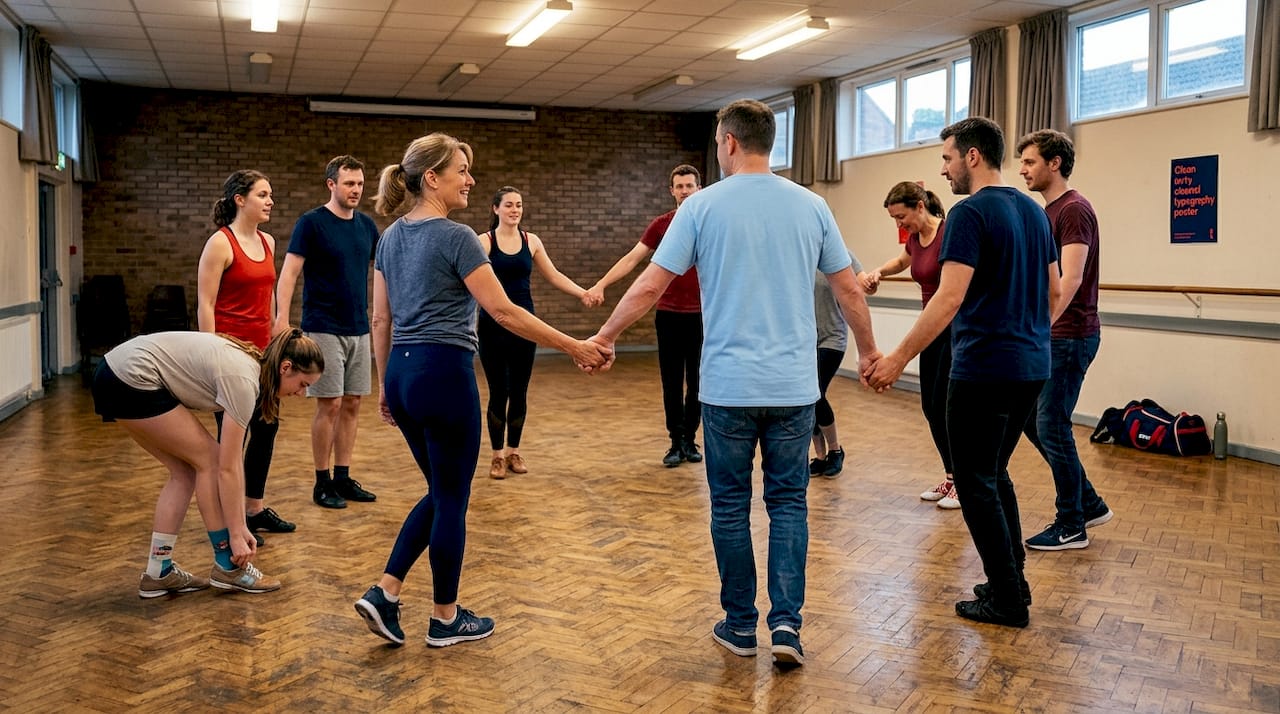
Krąg jest społeczną siłą napędową Rueda de Casino. W przeciwieństwie do tańców liniowych lub tańców w parach, krąg sprawia, że wszyscy są dla siebie widoczni. Kiedy następuje zmiana partnera, przechodzisz do następnej osoby w kręgu. Tworzy to rotacyjną dynamikę społeczną, w której w ciągu 10-minutowej sesji możesz tańczyć z pięcioma lub sześcioma różnymi osobami. W przypadku imprez firmowych jest to niezwykle skuteczne w przełamywaniu hierarchii i budowaniu spójności zespołu. W przypadku przyjęć urodzinowych lub wesel, wyciąga gości z ich klastrów społecznych i organicznie miesza salę.
Rola osoby dzwoniącej
Caller jest najbardziej wykwalifikowaną osobą na sali. Musi znać każdy ruch w repertuarze, odczytywać poziom umiejętności grupy w czasie rzeczywistym i sekwencjonować wezwania w sposób, który utrzymuje wzrost energii bez przytłaczania uczestników. Autentyczne wydarzenia wykorzystują hiszpańskojęzyczne wezwania i integrują kubańskie style muzyczne, takie jak son, timba i rumba. Caller może krzyknąć “Dame”, aby zasygnalizować zmianę partnera, “Enchufla”, aby wywołać określoną sekwencję obrotów lub “Vacila”, aby wywołać zabawny, zalotny ruch.
Poniżej znajduje się tabela referencyjna typowych ruchów Ruedy i tego, co sygnalizują:
| Połączenie w języku hiszpańskim | Opis ruchu | Poziom trudności |
|---|---|---|
| Dame | Podaj partnera w lewo | Początkujący |
| Enchufla | Obróć partnera pod pachami, przełącz | Początkujący |
| Vacila | Zabawny obrót i pauza | Początkujący/średniozaawansowany |
| Sombrero | Ruch ramienia w stylu końcówki kapelusza | Pośredni |
| Setenta | Złożona sekwencja obrotów | Zaawansowany |
| Montaña | Grupowy ruch falowy | Pośredni |
Wybór muzyki i kubańska autentyczność
Muzyka nie jest hałasem w tle. Jest elementem strukturalnym. Son cubano, rytmiczny przodek salsy, niesie ze sobą specyficzny wzór clave, który wyszkoleni tancerze czują instynktownie. Timba jest szybsza i bardziej perkusyjna, odpowiednia dla doświadczonych grup. Rumba jest wolniejsza i bardziej ekspresyjna, idealna do otwarcia sesji, gdy goście wciąż znajdują się na nogach. Wybór właściwego style tańca salsa dla każdej fazy wydarzenia jest tak samo ważne, jak wybór odpowiedniego rozmówcy.
Jak sekwencjonować muzykę:
- Otwórz son cubano w umiarkowanym tempie, aby rozluźnić gości.
- Wprowadź timbę, gdy grupa nauczy się pięciu lub sześciu podstawowych ruchów.
- Używaj rumby do wolniejszych, ekspresyjnych momentów pomiędzy sekwencjami o wysokiej energii.
- Powrót do timba lub upbeat son na finał, aby zamknąć na wysokim poziomie
- Przejście do salsy freestyle po zakończeniu sesji strukturalnej.
Polska społeczność salsowa bardzo docenia te rozróżnienia. Wydarzenia wykorzystujące autentyczną muzykę kubańską, a nie generyczny latynoski pop, konsekwentnie otrzymują lepsze opinie od uczestników, ponieważ spójność kulturowa doświadczenia jest odczuwalna nawet przez osoby, które nie potrafią nazwać gatunku.
Korzyści płynące ze zorganizowanej salsy na polskich imprezach
Po zapoznaniu się z ramami kulturowymi, przyjrzyjmy się wyjątkowym zaletom salsy strukturalnej dla wydarzeń w Polsce. Niezależnie od tego, czy organizujesz firmowy dzień integracyjny we Wrocławiu, przyjęcie weselne w Gdańsku, czy imprezę urodzinową w Poznaniu, salsa strukturalna zapewnia korzyści, z którymi niewiele innych formatów rozrywki może się równać.
Zaangażowanie na wszystkich poziomach umiejętności
Jest to najczęstsza obawa, jaką zgłaszają organizatorzy imprez: “Co jeśli moi goście nigdy wcześniej nie tańczyli?”. Odpowiedź jest taka, że Rueda de Casino została zaprojektowana dokładnie dla takiej sytuacji. Prowadzący kontroluje poziom trudności. Wykwalifikowany caller czyta salę i utrzymuje proste ruchy, dopóki grupa nie będzie gotowa na więcej. Początkujący odnoszą sukces w ciągu kilku minut, co jest potężnym emocjonalnym haczykiem, który utrzymuje ich zaangażowanie przez resztę imprezy.
Mieszanie społeczności poprzez zmiany partnerów
Zmiana partnerów jest jedną z najbardziej niedocenianych cech salsy strukturalnej. W typowym środowisku imprezowym ludzie mają tendencję do grupowania się z osobami, które już znają. Rueda automatycznie przełamuje ten schemat. Każde wezwanie Dame zmienia partnerów w kręgu, a w ciągu 15 minut goście, którzy przybyli jako nieznajomi, fizycznie połączyli się z większością grupy. Dla Strategie zaangażowania w wydarzenia które wykraczają poza etykiety z imionami i gry przełamujące lody, jest to naprawdę skuteczne.
Bogactwo kulturowe jako czynnik wow
Polscy goście eventowi są coraz bardziej wyrafinowani. Widzieli budki fotograficzne, zespoły na żywo i wieczory kasynowe. Zorganizowana sesja salsy kubańskiej z autentycznym wokalistą, prawdziwą kubańską muzyką i kręgiem 20 osób poruszających się synchronicznie to coś, czego większość z nich nigdy nie doświadczyła. Ten czynnik nowości przekłada się bezpośrednio na udostępnianie w mediach społecznościowych, rekomendacje ustne i trwałe wspomnienia.
Polska ma silną kubańską scenę salsową, ze studiami i festiwalami w Warszawie i Krakowie, które budują społeczność od ponad dwóch dekad. Miasta takie jak Wrocław, Łódź i Trójmiasto również mają aktywne społeczności. Oznacza to, że wykwalifikowani callerzy i instruktorzy są dostępni w całym kraju, co sprawia, że organizacja autentycznego wydarzenia jest o wiele bardziej dostępna, niż większość planistów zdaje sobie sprawę.
Praktyczne korzyści dla organizatorów wydarzeń:
- Od gości nie jest wymagane wcześniejsze doświadczenie taneczne
- Długość sesji jest elastyczna, od 20 minut do 2 godzin.
- Łatwe skalowanie od 10 do 100 uczestników
- Praca w pomieszczeniach lub na zewnątrz przy minimalnym wyposażeniu
- Dodaje unikalną narrację kulturową do historii wydarzenia
Pro Tip: W przypadku imprez firmowych, poinformuj rozmówcę z wyprzedzeniem o dynamice grupy. Jeśli zespół jest powściągliwy, zacznij od prostszych ruchów i więcej humoru. Jeśli grupa jest nastawiona na rywalizację, wprowadź przyjazne wyzwanie, w którym dwa koła ścigają się, aby ukończyć sekwencję. Dostosowanie podejścia do Kubańska salsa na uroczystościach stanowi różnicę między dobrym a świetnym wydarzeniem.
Jak zorganizować zorganizowane wydarzenie salsowe?
Przekonany o wartości? Oto, w jaki sposób możesz wprowadzić ustrukturyzowaną kubańską salsę na własne wydarzenie. Proces planowania jest prostszy niż większość ludzi się spodziewa, ale szczegóły mają ogromne znaczenie.
Przewodnik planowania krok po kroku:
Zdefiniuj kontekst wydarzenia. Firmowa sesja integracyjna wymaga innego tonu niż wieczór panieński. Zdecyduj się na główny cel: mieszanie społeczne, rozrywka, edukacja kulturalna lub czysta zabawa. To kształtuje każdą następną decyzję.
Znajdź wykwalifikowanego rozmówcę. Jest to najważniejsza osoba, jaką możesz zatrudnić. Poszukaj kogoś z doświadczeniem w Rueda de Casino, a nie tylko ogólnymi referencjami w nauczaniu salsy. Poproś o obejrzenie wideo z jego występu dla grupy o mieszanych umiejętnościach. Świetny konferansjer sprawia, że początkujący czują się pewnie, a doświadczeni tancerze nie boją się wyzwań.
Starannie wybierz miejsce wydarzenia. Potrzebna jest gładka, niewykładzinowa podłoga z wystarczającą ilością miejsca, aby uczestnicy mogli utworzyć okrąg z wyciągniętymi ramionami. Podstawowa zasada to 2 metry kwadratowe na osobę. Wysokość sufitu ma również znaczenie, jeśli prowadzący planuje używać podniesień lub skoków w zaawansowanych sekwencjach.
Wybierz muzykę z wyprzedzeniem. Współpracuj z rozmówcą, aby stworzyć listę odtwarzania, która będzie pasować do przebiegu sesji. Unikaj pozostawiania wyboru muzyki na ostatnią chwilę. Struktura wydarzenia oznacza synchronizację, wyznaczonego prowadzącego oraz zaplanowany przepływ muzyki i tańca, więc lista odtwarzania jest dokumentem strukturalnym, a nie tylko tłem.
Zaplanuj przebieg sesji. Typowa 60-minutowa sesja strukturalna może obejmować 10-minutowe wprowadzenie i rozgrzewkę, 30-minutową sesję Ruedy z przewodnikiem ze stopniowo złożonymi ruchami, 10-minutową przerwę na freestyle i 10-minutowy finał z całą grupą z powrotem w kręgu.
Przygotuj swoich gości. Wyślij krótką notatkę przed wydarzeniem, informując gości, aby nosili wygodne buty i że doświadczenie taneczne nie jest wymagane. Zarządzanie oczekiwaniami zmniejsza niepokój i znacznie zwiększa liczbę uczestników.
Użyj tego Przewodnik po organizacji salsy kubańskiej aby sprawdzić swoje planowanie pod kątem sprawdzonych ram i dokonać przeglądu salsa party workflow aby zapoznać się ze szczegółowym opisem sekwencji wydarzeń profesjonalnych.
Najczęstsze pułapki, których należy unikać:
- Rezerwacja rozmówcy, który nigdy nie prowadził grupy innej niż tancerze
- Wybór miejsca ze śliską lub nierówną podłogą
- Pomijanie rozgrzewki i przechodzenie od razu do złożonych ruchów
- Odtwarzanie zbyt szybkiej muzyki dla początkujących
- Niewyznaczenie wyraźnego czasu rozpoczęcia i zakończenia sesji strukturalnej.
Pro Tip: Zawsze miej przygotowaną zapasową listę odtwarzania na wypadek awarii głównego systemu muzycznego. Nic nie zabija energii sesji Ruedy szybciej niż przerwa techniczna. Prosty głośnik Bluetooth ze wstępnie pobraną listą odtwarzania jest wystarczającym zabezpieczeniem dla większości wydarzeń.
Dlaczego przyjęcie struktury wzmacnia magię salsy?
Oto opinia, która może cię zaskoczyć: najbardziej spontaniczne, radosne momenty salsy, których byliśmy świadkami na imprezach w Polsce, miały miejsce podczas zorganizowanych sesji, a nie podczas tańca freestyle po ich zakończeniu.
Powszechną obawą jest to, że struktura wydaje się sztywna, jak musztra lub próba. Ale to błędne rozumienie tego, co struktura robi w kontekście społecznym. Kiedy goście wiedzą, jaki ruch będzie następny, ponieważ prowadzący właśnie to ogłosił, ich uwaga przenosi się z samoświadomości na połączenie. Przestają się martwić, że będą wyglądać głupio i zaczynają skupiać się na partnerze, muzyce i grupie.
Autentyczna kubańska salsa nigdy nie miała być solowym występem. Wyrosła ze wspólnych przestrzeni w Hawanie, gdzie celem było uczestnictwo, a nie spektakl. Kiedy przeniesiesz tę filozofię na polską kolację firmową lub przyjęcie weselne, dzieje się coś niezwykłego. Ludzie, którzy powiedzieli “nie tańczę”, śmieją się i kręcą 15 minut później. Ta transformacja nie jest przypadkowa. Jest bezpośrednim rezultatem struktury tworzącej bezpieczeństwo.
Widzieliśmy ten wzorzec powtarzający się na wydarzeniach we Wrocławiu i poza nim. Ustrukturyzowana sesja nie ogranicza doświadczenia. To jest powód niezapomniane chwile z salsą w ogóle się wydarzy. Daj ludziom ramy, a wypełnią je własną energią. Usuń ramy, a większość ludzi stanie na krawędzi podłogi, obserwując.
Przynieś autentyczną kubańską salsę na następne wydarzenie
Jeśli ten przewodnik podsunął Ci pomysły na kolejną imprezę, Castillo Salsa jest gotowe pomóc Ci je zrealizować. Specjalizujemy się w zorganizowanej obsłudze imprez salsowych na weselach, imprezach firmowych, przyjęciach urodzinowych i prywatnych uroczystościach w całej Polsce. Nasi konferansjerzy mają doświadczenie w prowadzeniu grup o różnym stopniu zaawansowania, a nasze programy są tworzone tak, aby zmaksymalizować uczestnictwo od pierwszego ruchu. Zapoznaj się z naszą ofertą eventową, aby zobaczyć, jak dostosowujemy każde doświadczenie, lub zanurz się głębiej w kubańską salsę, aby zrozumieć kulturowe podstawy wszystkiego, co robimy. Zbudujmy razem coś niezapomnianego.
Często zadawane pytania
Co sprawia, że wydarzenie salsowe jest ‘zorganizowane’?
Ustrukturyzowane wydarzenie salsowe odbywa się zgodnie z zaplanowanym formatem z prowadzącym, ustalonymi ruchami i zsynchronizowanym tańcem grupowym, a nie otwartym tańcem towarzyskim. Rueda de Casino wykorzystuje callera, krąg i choreografię jako główne elementy organizacyjne.
Czy salsa zorganizowana jest tylko dla doświadczonych tancerzy?
Nie, zorganizowane imprezy salsowe są specjalnie zaprojektowane tak, aby mogli w nich uczestniczyć ludzie na wszystkich poziomach umiejętności, w tym zupełnie początkujący. Prowadzący kontroluje poziom trudności w czasie rzeczywistym, utrzymując przystępne ruchy, podczas gdy grupa wspólnie buduje pewność siebie.
Czy mogę zorganizować zorganizowane wydarzenie salsowe w Polsce?
Tak, Polska ma silną kubańską scenę salsową ze studiami i festiwalami w Warszawie, Krakowie i Wrocławiu, dzięki czemu łatwo jest znaleźć wykwalifikowanych callerów i instruktorów na swoje wydarzenie.
Czy muszę znać hiszpański w Rueda de Casino?
Jest to pomocne, ale nie wymagane. Caller zazwyczaj uczy najpopularniejszych hiszpańskich nazw ruchów na początku sesji, a ruchy są wywoływane po hiszpańsku z wystarczającą demonstracją fizyczną, aby nawet osoby nie mówiące po hiszpańsku szybko nadążały.
