TL;DR:
- Structured dance events with defined schedules and roles outperform casual gatherings in guest satisfaction and cultural depth.
- Applying structure in Cuban salsa enhances authenticity, builds confidence, and fosters group energy through formats like rueda de casino.
- Flexibility within a well-designed structure creates authentic participation, making events memorable and engaging for all skill levels.
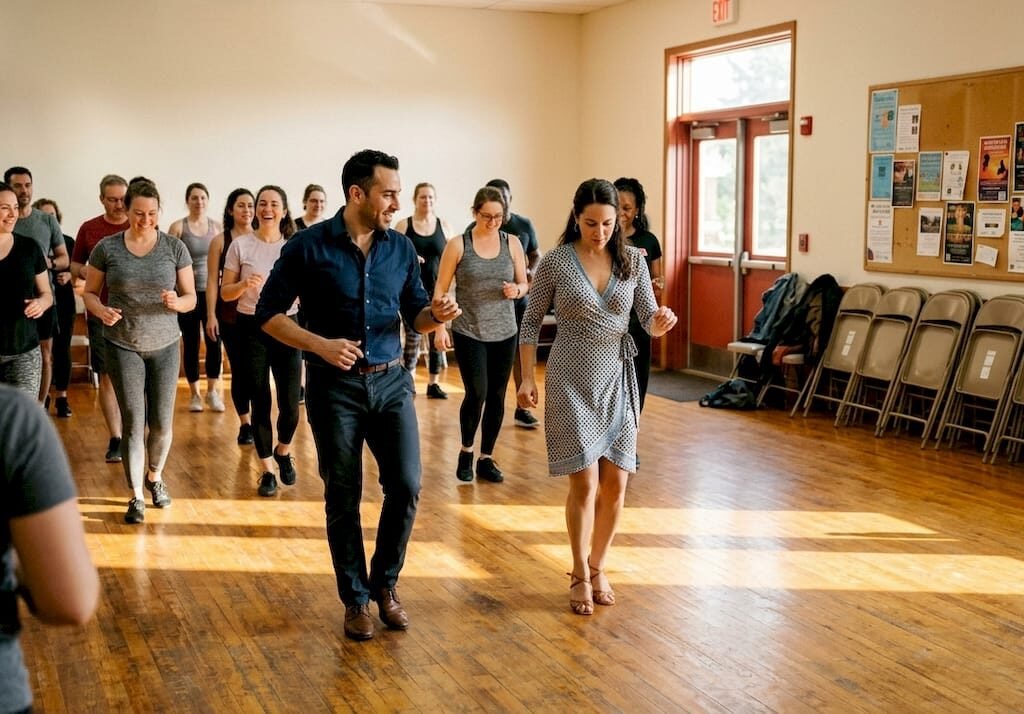
Most people assume dance events are spontaneous, loose, and freestyle by nature. That assumption costs event planners some of the most powerful engagement opportunities available. Structured dance events, meaning events built around a planned schedule, defined roles, and intentional choreography frameworks, consistently outperform casual dance gatherings in guest satisfaction, cultural depth, and shared energy. Cuban salsa, with its rich rhythmic tradition and social formats, is especially well-suited to this model. This guide breaks down what structured dance events actually are, how they work in a Cuban salsa context, and how you can design one that leaves your Wrocław guests talking for months.
Key Takeaways
| Point | Details |
|---|---|
| Structured events drive engagement | Events with defined roles and schedules foster excitement and participation. |
| Cultural immersion boosts authenticity | Following Cuban salsa traditions makes your event memorable and meaningful. |
| Planning is key to success | Clear steps, expert guidance, and proven formats make for an unforgettable structured dance event. |
| Balance structure with fun | A flexible approach allows both discipline and spontaneous enjoyment for all. |
What is a structured dance event?
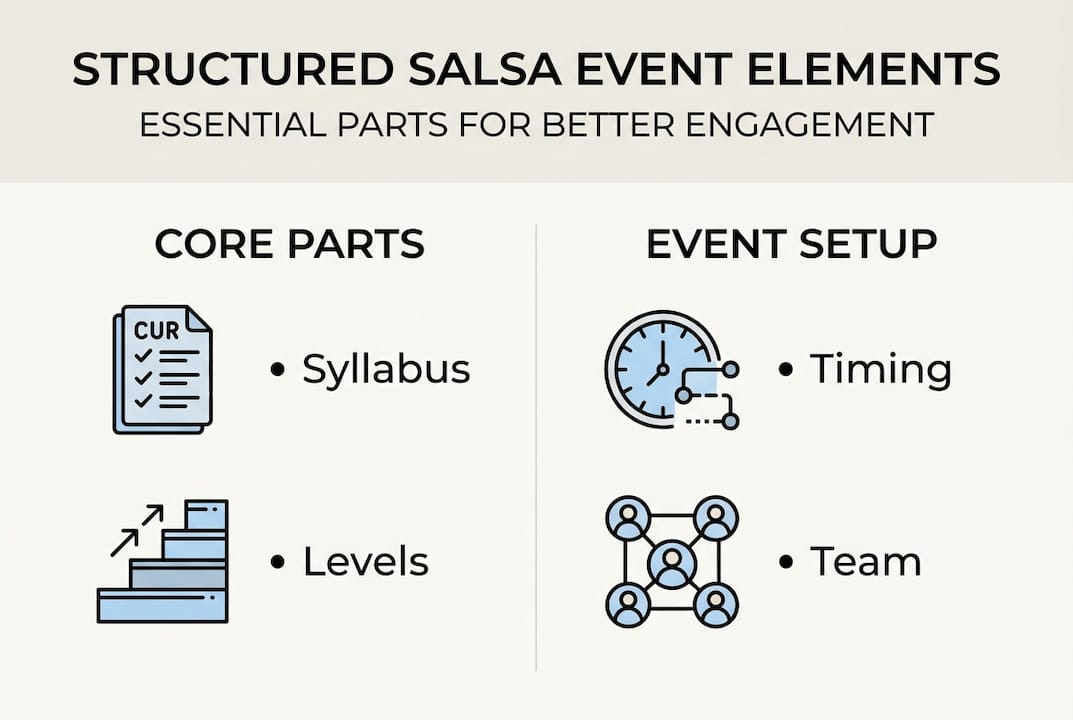
A structured dance event is not a rigid performance where guests sit and watch. It is an event built around a deliberate plan: a defined schedule, clear instructor roles, and often a syllabus or level system that shapes what participants do and when. The structure creates a container, and inside that container, people feel safe enough to engage fully.
A common misconception is that structure kills spontaneity. In reality, the opposite is true. When guests know what to expect, they relax into the experience faster. A first-time salsa participant who understands the format is far more likely to step onto the dance floor than someone dropped into a chaotic free-for-all.
Key elements that define a structured dance event include:
- Defined schedule and routines: Sessions flow in a logical sequence, from instruction to practice to social dancing.
- Choreography or syllabus framework: Specific moves or sequences are taught, ensuring everyone works from the same foundation.
- Role assignments: Leaders and followers are identified, which is especially important in partner dances like Cuban salsa.
- Curated music selection: Music is chosen to match the level and energy of each session phase.
- Participation protocols: Rotation systems, partner switching, and floor etiquette are communicated clearly.
Many dance organizations use syllabus restrictions to control what figures and skills participants may perform, which directly structures the event content and protects the experience for all skill levels.
| Feature | Structured event | Unstructured event |
|---|---|---|
| Schedule | Pre-planned, timed | Open-ended |
| Skill levels | Defined by syllabus | Mixed, undefined |
| Instructor role | Active guide | Optional or absent |
| Guest confidence | High | Variable |
| Cultural depth | Strong and intentional | Dependent on crowd |
| Example | Rueda de casino workshop | Open social dance night |
Structure is not the opposite of fun. It is the architecture that makes genuine fun possible for everyone in the room, regardless of experience level.
When you look at how salsa dance shows format their programming, you see this principle in action. The same logic applies to corporate dance workshops, where a clear structure is what makes a group of strangers suddenly move together with purpose.
How structure enhances Cuban salsa experiences
Cuban salsa is not just a dance style. It is a living cultural tradition rooted in Afro-Cuban rhythms, social interaction, and collective joy. Structure, when applied thoughtfully, does not dilute that tradition. It amplifies it.
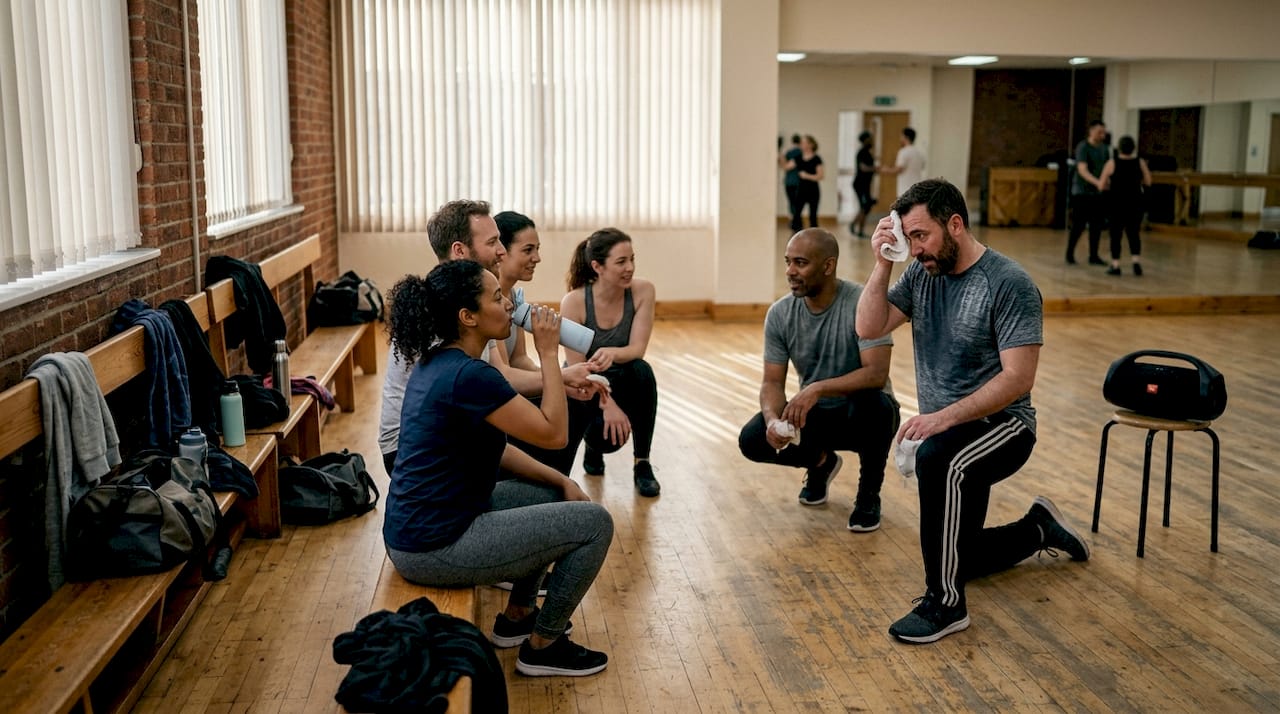
A well-designed syllabus acts as a bridge to cultural authenticity. When participants learn specific Cuban salsa vocabulary, such as the basic step, the guapea, or the vacilala, they are not just learning moves. They are absorbing a cultural language. That experience is far more meaningful than copying someone randomly on a dance floor.
Level restrictions also solve one of the biggest barriers in social dancing: intimidation. Beginners feel safe in a structured environment because they are not expected to keep up with advanced dancers. Advanced participants, meanwhile, have room to shine in their designated sessions. Competition formats define levels where syllabus moves are required at lower tiers, while higher levels allow creative freedom, and this model works just as well for social events.
Unique benefits of structure in a Cuban salsa context include:
- Group dynamics: Structured formats naturally build team energy, which makes them ideal for corporate events or large celebrations.
- Rueda de casino: This circle format, where partners rotate on a caller’s command, is inherently structured and creates infectious shared excitement.
- Role rotation: Participants experience both leading and following, deepening empathy and connection.
- Call-and-response energy: Cuban salsa’s musical tradition includes spontaneous audience participation, which a structured event can deliberately incorporate.
Pro Tip: When designing your Wrocław event, use structure during the first 60 to 90 minutes to build confidence and group cohesion, then ease into more relaxed social dancing. That transition from guided to free feels like a reward, and guests respond with visible energy.
For more on building that momentum, explore proven salsa engagement strategies and understand the real advantages of salsa shows when they are framed with intentional structure.
Essential elements for planning a structured dance event
Planning a structured Cuban salsa event does not require a dance background. It requires clear thinking about goals, logistics, and the guest experience. Here is a step-by-step approach that works for events of all sizes in Wrocław.
- Set your event goals: Decide what success looks like. Is it cultural exposure, team bonding, entertainment, or celebration? Your goal shapes every other decision.
- Select your syllabus and levels: Choose the dance content based on your audience. Beginners need foundational moves; mixed groups benefit from parallel tracks.
- Define your schedule: Block out arrival, warm-up, instruction, practice, social dancing, and wrap-up. Stick to it.
- Assign qualified instructors: One instructor per 15 to 20 participants is a solid ratio for interactive workshops.
- Integrate Cuban salsa elements: This means authentic music, appropriate decor, and language cues that honor the culture.
- Manage signups and rotations: Use partner rotation systems to maximize interaction and prevent cliques from forming.
Syllabus and level restrictions ensure safety and clarity in event content, which is especially valuable when your guest list includes people with no prior dance experience.
| Planning component | Typical options |
|---|---|
| Event duration | 90 minutes, 2 hours, half-day |
| Skill levels | Beginner only, mixed, advanced track |
| Instructor count | 1 lead plus 1 assistant per 20 guests |
| Music format | Live band, DJ, curated playlist |
| Format style | Workshop, social, showcase, or hybrid |
| Venue setup | Circle floor, open studio, stage with dance area |
Pro Tip: Partner with local Cuban salsa experts who know Wrocław’s event culture. Authenticity is immediately felt by guests, and it dramatically raises the perceived value of your event.
For inspiration on what is possible, browse salsa entertainment ideas and explore how themed dance nights create unforgettable atmospheres when structure and creativity work together.
Popular structured dance event formats for Wrocław
Wrocław’s event scene has appetite for distinctive, participatory experiences. Generic entertainment no longer impresses. These structured Cuban salsa formats consistently deliver strong results for audiences ranging from corporate groups to wedding parties.
Dance organizations worldwide rely on syllabus and level-based formats precisely because they scale well and create repeatable quality. Here is how those formats translate to Cuban salsa events in Wrocław:
- Syllabus-based socials: Guests are placed in skill groups and rotate through short, focused instruction blocks before joining a curated social dance. Great for mixed-level corporate groups or birthday events.
- Rueda de casino circles: A caller leads couples through choreographed partner swaps in a circle. The format is visually spectacular, deeply Cuban, and works well in venues with open floor space. Energy builds fast.
- Structured performance showcases: Professional dancers perform, then immediately invite guests to replicate key elements. Participation is built into the format rather than added as an afterthought.
- Progressive workshops: Participants move through beginner, intermediate, and social modules in a single evening. Each phase builds on the last, creating a genuine sense of achievement.
- Level-based open dancing: After structured instruction, the floor opens but is organized by skill zone. Beginners stay in one area, more experienced dancers in another, with instructors floating between zones.
Choosing the right format depends on your audience and your goals. A corporate team-building event benefits most from rueda de casino because the rotation mechanic mirrors collaborative group dynamics. A wedding reception might favor a showcase plus social format, giving guests a memorable performance and then the confidence to join in.
For a broader view of what is possible, look at latin dance event ideas and the documented Latin dance event benefits that planners across Poland are already leveraging.
Rethinking structure: Why flexibility makes or breaks your dance event
Here is something most planning guides will not tell you: over-structuring is as dangerous as having no structure at all. We have seen it happen at well-intentioned events where every minute was scripted, every move was corrected, and guests left feeling like they had survived a drill rather than celebrated.
The best structured Cuban salsa events we have experienced share one trait. They use structure as a stage, not a script. The framework gives people orientation. The flexibility inside that framework gives people freedom. Those two things working together produce the moments guests photograph, share, and remember a year later.
Conventional planning wisdom pushes coordinators to pack in more content, more instruction, more rules. The reality from the floor is the opposite. Fewer rules, executed with clarity, create more authentic participation than elaborate programs that leave guests feeling managed.
Structure is the stage. The show happens when guests forget they are following a structure at all.
If you want to see what that balance looks like in practice, look at how we transform social celebrations in Wrocław by letting the music and the moment do the heavy lifting once the foundation is set.
Bring your structured Cuban salsa event to life
You now have the framework. What makes the difference between a good plan and an unforgettable event is the team that executes it. At Castillo Salsa, we specialize in exactly that: taking your goals and translating them into a culturally rich, fully customized Cuban salsa experience that your guests will not stop talking about. From initial concept to the final song, every detail is guided by professionals who live and breathe this culture. Explore our Cuban salsa engagement strategies, review a real party workflow for Wrocław, or simply learn about Cuban salsa to understand why this is the most engaging entertainment choice for your next event.
Frequently asked questions
What makes a dance event ‘structured’?
A structured dance event uses a planned format, often with set routines, syllabus restrictions, and a defined schedule that guides participants from instruction through social dancing.
Why choose structured events for Cuban salsa?
Structure fosters cultural authenticity, helps participants of all levels feel welcome, and facilitates dynamic group activities like rueda de casino. Competition level systems show this model creates clarity and inclusion simultaneously.
How do you ensure authenticity in a structured Cuban salsa event?
Partner with qualified salsa instructors, use traditional Cuban music, and follow established syllabus standards for dance routines so the cultural integrity stays intact throughout the event.
Can structured events include open dancing or improvisation?
Absolutely. Blending structured instruction sessions with free dance time is actually the most effective format, because the structure gives guests the confidence they need to improvise without fear.
What is rueda de casino?
Rueda de casino is a lively Cuban salsa format where couples dance in a circle, rotating partners as a designated caller shouts out choreographed moves for the whole group to perform simultaneously.
