TL;DR:
- Dance workshops outperform traditional activities by fostering genuine connection and staff engagement.
- Incorporating Polish folk and Latin dances creates cultural pride, variety, and stronger team cohesion.
- Properly designed dance sessions build skills in trust, innovation, and leadership applicable to workplaces.
Corporate event planners across Poland are discovering something surprising: dance workshops consistently outperform many traditional team-building activities when it comes to real engagement, innovation, and lasting connection. This is not about forcing colleagues onto a dance floor. It is about creating a shared experience that breaks down professional walls naturally. Research confirms that structured dance programs improve self-efficacy and drive meaningful interaction in ways that standard icebreakers rarely achieve. In this article, you will learn why conventional approaches fall short, how dance workshops deliver measurable results, and exactly how to design one for your next corporate event.
Wichtigste Erkenntnisse
| Punkt | Einzelheiten |
|---|---|
| Dance outperforms tradition | Dance workshops drive stronger engagement and team interaction than common team-building exercises. |
| Cultural immersion boosts value | Integrating Polish folk and global dances creates memorable corporate experiences and strengthens cultural team bonds. |
| Benefits for hesitant participants | Even employees reluctant about dance gain confidence and satisfaction from evidence-based workshops. |
| Practical planning steps | Effective workshops require clear goals, customized selection, and collaboration with expert instructors. |
Why traditional team-building falls short
Most corporate event planners have been there. You book a trust fall exercise or a trivia night, the team goes through the motions, and two weeks later nobody remembers it. The problem is not effort. The problem is that many standard activities are designed around competition or passive participation, and neither builds real connection.
Repetitive formats wear teams down fast. When employees recognize the structure of an activity from a previous company retreat, engagement drops before the session even starts. Worse, some exercises create social pressure that makes quieter team members withdraw rather than open up. The goal of bonding ends up producing the opposite effect.
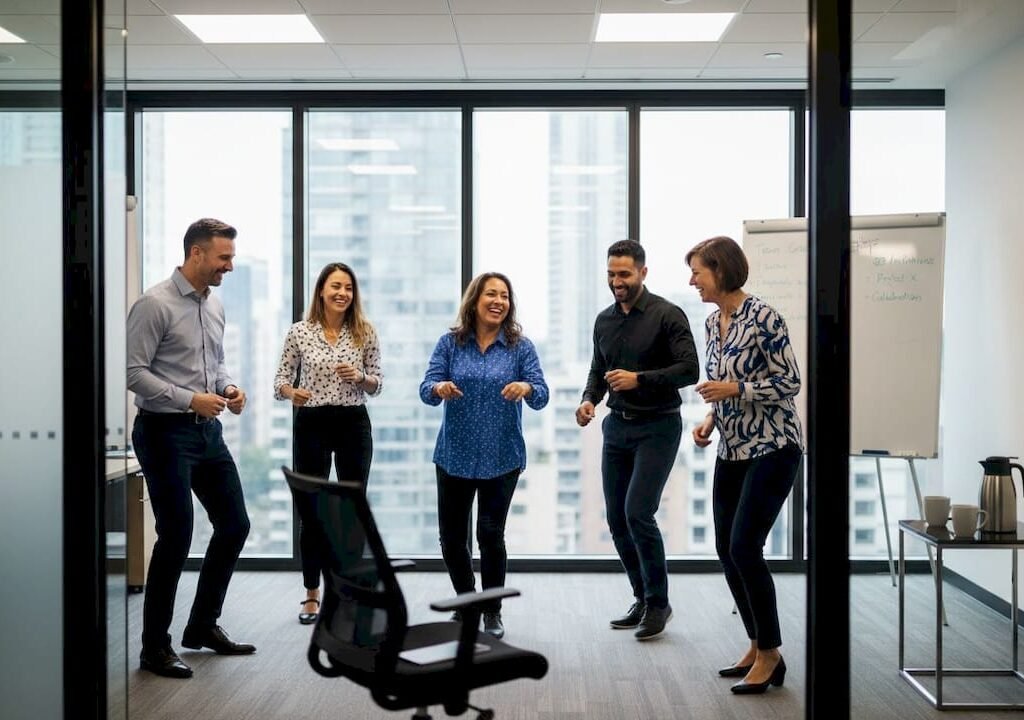
Dance changes the dynamic entirely. Movement creates shared laughter. Stumbling through a new rhythm together removes the professional mask people wear in meeting rooms. Nobody is the expert, so the hierarchy flattens. That shared vulnerability is exactly where real connection happens.
There is also a deeper issue with standard approaches. Traditional activities may feel forced, while dance offers natural ice-breaking by engaging the body and mind simultaneously. When self-efficacy, which is a person’s belief in their own ability to succeed, is ignored in activity design, outcomes suffer. Dance workshops are built around progressive skill-building, which directly addresses this gap.
“Activities that ignore participant self-efficacy tend to produce inconsistent outcomes. Dance, by contrast, builds confidence through structured progression and shared achievement.”
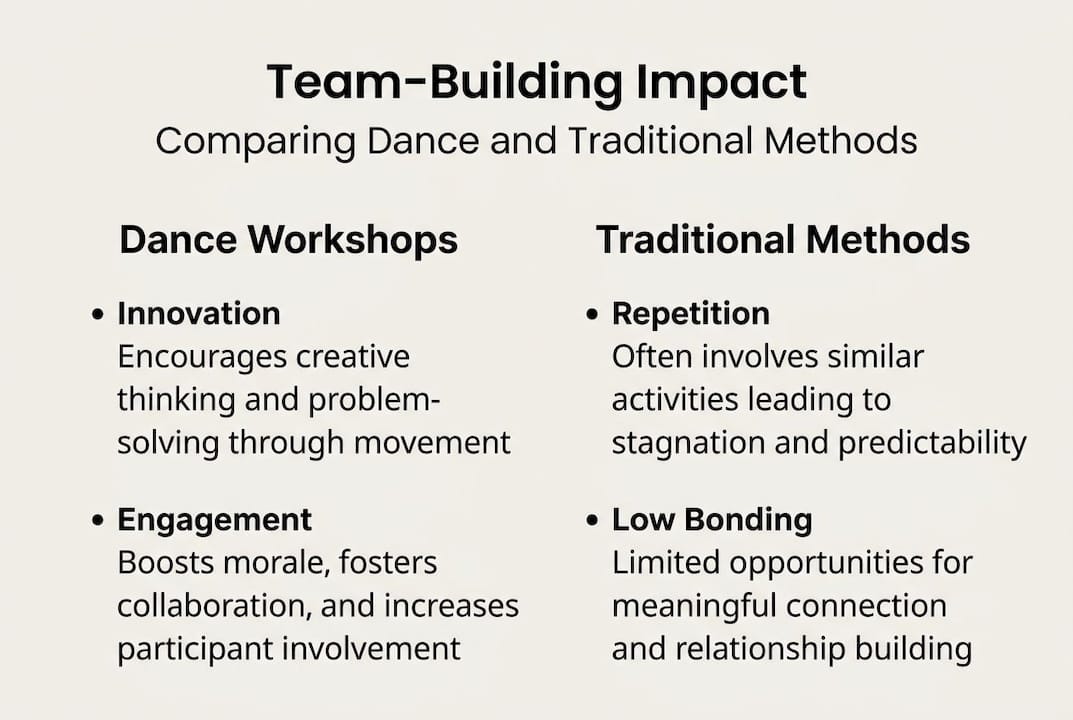
Here is a quick comparison of what separates typical team activities from dance workshops:
- Traditional activities: Often passive, competitive, or overly familiar
- Dance workshops: Active, collaborative, and physically engaging
- Traditional activities: Rarely create lasting emotional memory
- Dance workshops: Generate shared stories and inside moments
- Traditional activities: Can reinforce existing social hierarchies
- Dance workshops: Flatten hierarchy through shared learning
- Traditional activities: Low replayability across multiple events
- Dance workshops: Adaptable to different styles and group sizes
If you want to see how dance-driven icebreakers work in practice, the contrast with standard formats becomes immediately obvious. With standard approaches often missing the mark, let’s examine how dance uniquely delivers.
Dance workshops: Fostering interaction and innovation
Once you understand what standard activities lack, the case for dance workshops becomes very clear. They do not just entertain. They build skills that transfer directly into the workplace.
Die Forschung zeigt, dass dance methods foster innovation and leadership competencies by developing questioning, observing, and experimenting behaviors. These are the exact skills organizations spend thousands on leadership training to build. A well-designed dance workshop delivers them through movement, not lectures.
Die team collaboration benefits go beyond the session itself. Teams that move together develop a physical vocabulary of trust. They learn to read each other’s signals, adjust in real time, and support one another through mistakes. That is not a metaphor. It is literally what happens when you learn a partner dance.
Statistically, the numbers back this up. 66% session attendance in structured dance programs produces measurable improvements in self-efficacy and participant satisfaction. Consistency matters, and even a single well-run workshop creates a foundation for ongoing engagement.
| Ergebnis | Dance workshops | Traditional activities |
|---|---|---|
| Innovation skills | Hoch | Gering bis mäßig |
| Team interaction | Sehr hoch | Mäßig |
| Participant engagement | Hoch | Variabel |
| Self-efficacy boost | Measurable | Inconsistent |
| Kulturelles Eintauchen | Stark | Seltene |
Die Spaß und Interaktion die der Tanz hervorruft, sind keine Nebeneffekte. Sie sind der Mechanismus. Wenn Menschen lachen und sich bewegen, fallen ihre Abwehrmechanismen und es entsteht eine authentische Verbindung.
Profi-Tipp: Wenn Sie einem skeptischen Team einen Tanzworkshop vorstellen, sollten Sie die Neugierde in den Vordergrund stellen und nicht die Leistung. Sagen Sie den Teilnehmern, dass sie dort sind, um zu entdecken, nicht um zu beeindrucken. Diejenigen, die sich zu Beginn am meisten sträuben, haben am Ende oft am meisten davon.
Für eine breitere Inspiration zu Formaten, Ideen für Salsa-Unterhaltung zeigen, wie flexibel diese Programme in unterschiedlichen Unternehmenskontexten sein können. Sobald die Grenzen traditioneller Aktivitäten klar sind, ist es an der Zeit zu sehen, wie der Tanz die Ergebnisse verändert.
Kulturelles Eintauchen: Polnische Tänze und globale Stile nutzen
Polen verfügt über ein bemerkenswert reiches tänzerisches Erbe, und die Planer von Firmenveranstaltungen sitzen auf einer ungenutzten Ressource. Polnische Volkstänze in Teamworkshops einzubauen, dient nicht nur der Unterhaltung. Er schafft ein Gefühl der gemeinsamen Identität und des kulturellen Stolzes, das sich mit allgemeinen Aktivitäten einfach nicht erreichen lässt.
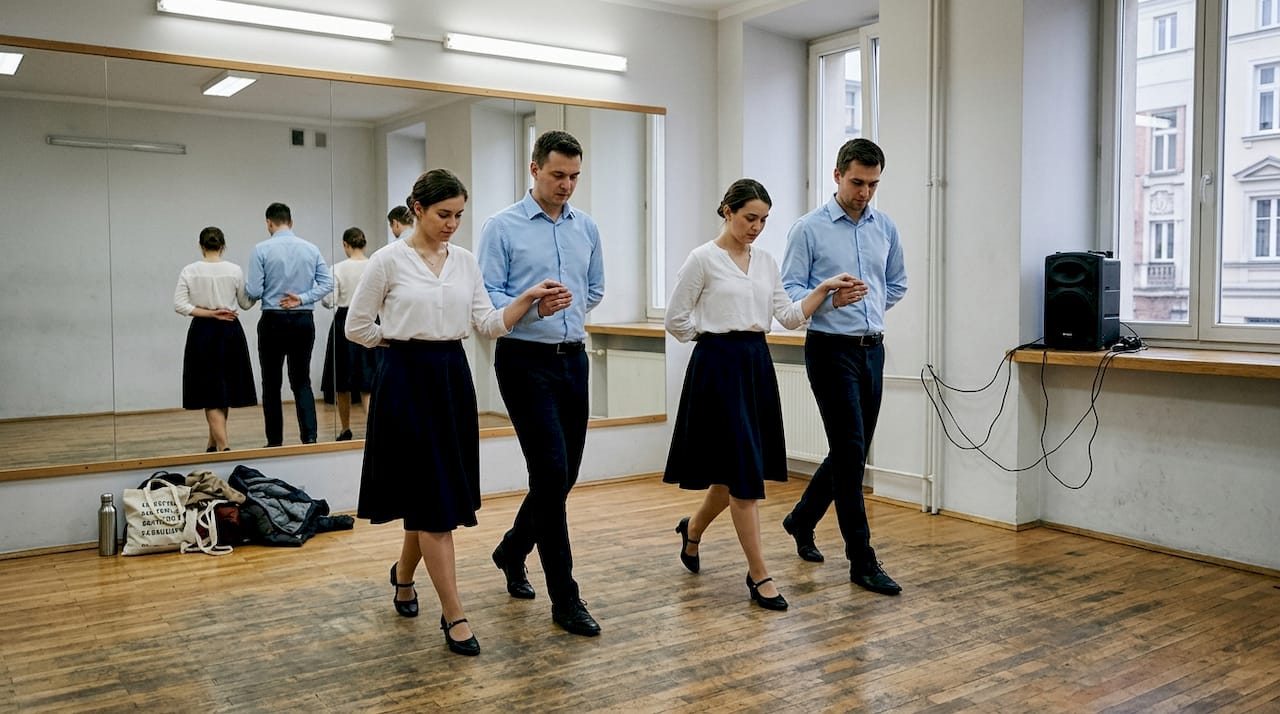
Tänze wie die Polonaise, die Mazurka und der Kujawiak haben jeweils unterschiedliche Rhythmen und soziale Bedeutungen. Die Polonaise, ein historischer Festtanz, eignet sich hervorragend für Gruppenveranstaltungen, da sie Koordination erfordert und ein visuelles Spektakel darstellt. Die energiegeladene Fußarbeit der Mazurka und der lyrische Fluss des Kujawiak bieten eine Abwechslung, die die Gruppen über einen ganzen Workshop hinweg beschäftigt.
Die Reichweite des polnischen Volkstanzes ist wirklich beeindruckend. Ensembles wie Mazowsze haben weltweit 26 Millionen Menschen erreicht, was zeigt, dass diese Kulturform weit über Polens Grenzen hinaus Anklang findet. Für internationale Teams oder Unternehmen mit einer vielfältigen Belegschaft bedeutet diese weltweite Anerkennung ein zusätzliches Prestige für das Erlebnis.
| Tanzstil | Kultureller Ursprung | Niveau des Engagements | Reichweite des Publikums |
|---|---|---|---|
| Polonaise | Polnische Folklore | Gruppe, zeremoniell | Breite |
| Mazurka | Polnische Folklore | Energetisch, Partner | Regional bis global |
| Kujawiak | Polnische Folklore | Lyrisch, emotional | Regional |
| Kubanische Salsa | Lateinisch/Kubanisch | Partner, sozial | Global |
| Bachata | Dominikanisch/Lateinisch | Partner, Intimsphäre | Global |
Für Unternehmen, die Eintauchen in den kubanischen Tanz, Die Mischung aus lateinamerikanischen Stilen und polnischen Kulturelementen schafft ein einzigartiges Erlebnis. Es signalisiert den Mitarbeitern, dass die Veranstaltung mit Bedacht geplant wurde und nicht einfach aus einem Standardkatalog zusammengestellt wurde.
Hier sind die wichtigsten Tanzstile, die heute bei polnischen Firmenveranstaltungen verwendet werden:
- Polonaise: Ideal für Eröffnungszeremonien und Gruppenumzüge
- Kubanische Salsa: Hohe Energie, partnerschaftlich, hervorragend geeignet, um soziale Barrieren zu überwinden
- Mazurka: Kulturell reichhaltig, ideal für Veranstaltungen zum Thema Kulturerbe
- Bachata: Zugänglich für Anfänger, schafft Vertrauen zwischen den Partnern
- Zeitgenössische Gruppenchoreographie: Flexibel und modern, geeignet für jüngere Teams
Thematische Tanzabende die diese Stile miteinander verbinden, geben Planern ein leistungsfähiges Werkzeug für die Erstellung Unvergessliche Tanzveranstaltungen von denen die Mitarbeiter noch lange nach der Veranstaltung sprechen. Innovation und Interaktion sind abgedeckt, die kulturelle Bereicherung rundet das Gesamtbild ab.
Praktische Schritte: Gestaltung wirkungsvoller Tanzworkshops
Die Vorteile zu kennen ist eine Sache. Einen Workshop zu konzipieren, der sie tatsächlich bringt, ist eine andere. Die gute Nachricht ist, dass der Prozess einfach ist, wenn Sie einer klaren Struktur folgen.
Start by matching the dance style to your company culture and event goals. A conservative financial firm might connect more naturally with a structured Polonaise workshop than an open salsa session. A tech startup with a younger team might thrive in a high-energy Cuban salsa format. Neither is wrong. The fit matters more than the style.
Evidence-backed best practices confirm that workshops tailored to participant needs produce the highest satisfaction and the most lasting behavioral change. Generic formats produce generic results.
Here is a step-by-step approach to designing your workshop:
- Define your goal. Is the priority icebreaking, cultural immersion, leadership development, or pure celebration? Your goal shapes every other decision.
- Choose a style that fits your team. Consider age range, physical comfort levels, and cultural backgrounds.
- Select a qualified instructor. Look for someone with both dance expertise and facilitation experience. Energy and warmth matter as much as technical skill.
- Structure the session in phases. Begin with a warm-up, move into guided instruction, then allow free practice, and close with a group performance moment.
- Build in reflection time. A short group debrief after the session connects the experience to workplace themes like communication and trust.
- Gather feedback. A simple post-session survey helps you refine future workshops and shows employees their input is valued.
Pro Tip: Partner with reputable ensembles or established dance companies for authenticity. An instructor who brings genuine cultural knowledge elevates the entire experience from a fun activity to a meaningful event.
Common pitfalls include unclear objectives, sessions that run too long without breaks, and failing to accommodate employees with physical limitations. Always offer a modified participation option so nobody feels excluded. The goal is for everyone to find their level of engagement, not to perform perfectly.
If you want to see how professional production can transform your event with dance, the difference between a DIY approach and a professionally designed experience is significant. Now that you know the impact and benefits, implementation becomes the exciting part.
The overlooked impact: Why dance unlocks true engagement
Here is something most corporate planners do not fully appreciate until they have run a dance workshop: the real value is not the dancing. It is what the dancing makes possible.
When people move together, they access a kind of social trust that verbal exercises cannot manufacture. You can spend an hour in a workshop talking about communication, or you can spend twenty minutes learning a partner dance and feel it. The body remembers what the mind forgets.
The common misconception is that dance workshops are recreational extras, nice to have but not serious team-building. Dance workshops outperform conventional team building in energizing and connecting participants, which means treating them as a core strategy rather than a novelty changes what your events can achieve.
From our experience designing immersive dance experiences for corporate groups, the teams that commit fully, including the skeptics, consistently report stronger post-event cohesion. The shared achievement of learning something new together creates a reference point. Months later, colleagues still mention it.
Die energy and connection generated in a well-run dance workshop are not temporary. They become part of the team’s shared story. That is the outcome every event planner is actually chasing, and dance delivers it more reliably than most realize.
Transform your next corporate event with dance
If you are ready to move beyond forgettable team-building and create an experience your colleagues will genuinely remember, Castillo Salsa is built for exactly this. Based in Wrocław, we design unforgettable dance events for corporate groups of all sizes, blending authentic Cuban energy with professional event structure. Whether you want a high-energy salsa workshop or a culturally layered program, we customize every session to your team’s goals. Explore Kubanischer Salsa-Event-Zauber or browse the full range of Castillo Salsa services to find the format that fits your next event.
Häufig gestellte Fragen
What types of dance workshops work best for corporate events in Poland?
Polish folk dances like the Polonaise and Mazurka offer deep cultural immersion, while Latin styles like Cuban salsa deliver high-energy social interaction. The best choice depends on your team’s profile and event goals.
Do dance workshops improve team bonding more than traditional activities?
Yes. Dance methods develop questioning, observing, and experimenting skills that drive innovation, and high attendance in structured programs measurably improves self-efficacy and satisfaction beyond what standard activities typically achieve.
How can event planners tailor workshops for diverse teams?
Match the dance style to your team’s comfort level and cultural mix, and always offer modified participation options. Workshops tailored to participant needs consistently produce the highest satisfaction and the most meaningful outcomes.
Are dance workshops suitable for large corporate groups?
Absolutely. Ensembles like Mazowsze have engaged audiences of 26 million people worldwide, which confirms that dance-based experiences scale effectively for groups of any size.
What if some employees are hesitant about participating?
Encourage them gently and frame the session around exploration rather than performance. Low self-efficacy participants consistently benefit the most from dance workshops, gaining the greatest improvements in confidence and satisfaction.
