
TL;DR:
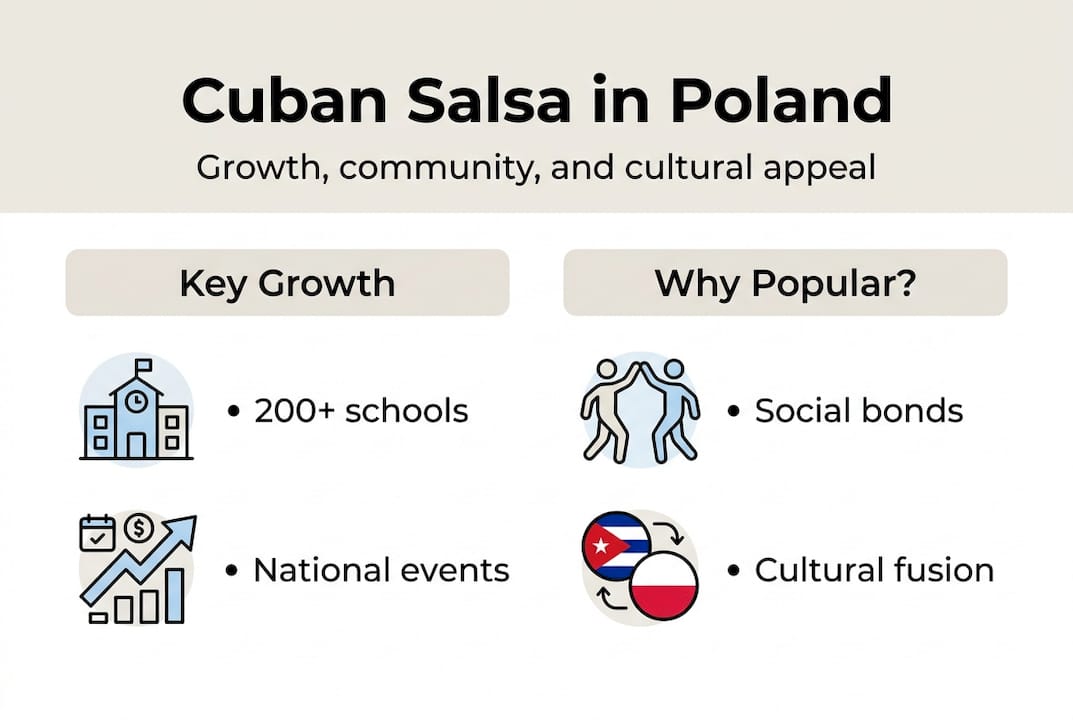
- Die kubanische Salsa-Szene in Polen ist schnell gewachsen, bis 2024 sollen es über 200 Tanzschulen sein.
- Die kubanische Salsa legt den Schwerpunkt auf Improvisation, kreisförmige Bewegungen und kulturelle Authentizität, was die polnischen Tänzer anzieht.
- Die integrative Gemeinschaft und die häufigen Veranstaltungen fördern die sozialen Kontakte und den kulturellen Ausdruck.
Salsa wird in der Regel mit den sonnenverwöhnten Straßen Havannas, den pulsierenden Nachtclubs von Miami oder den kultigen Ballsälen von New York in Verbindung gebracht. Polen ist selten der erste Ort, der einem in den Sinn kommt. Doch wenn man an einem Freitagabend in eine polnische Großstadt kommt, kann es sein, dass man sich mitten in einem überfüllten Salsa-Treff wiederfindet, wo sich die Körper mit ansteckender Energie zu kubanischen Rhythmen bewegen. Polens kubanische Salsa-Szene ist keine kleine Kuriosität. Sie ist eine ausgewachsene kulturelle Bewegung, mit über 200 Salsa-Tanzschulen die ab 2024 im ganzen Land betrieben wird. In diesem Artikel erfahren Sie, wie es dazu kam, warum polnische Tänzer es lieben und was die Szene wachsen lässt.
Wichtigste Erkenntnisse
| Punkt | Einzelheiten |
|---|---|
| Schnelles Wachstum der Salsa | Die kubanische Salsa-Szene in Polen hat sich schnell entwickelt und umfasst Hunderte von Schulen und Veranstaltungen. |
| Einzigartiger Tanz-Appeal | Die kubanische Salsa zieht die Polen durch ihre authentischen Bewegungen, ihre Improvisation und ihre soziale Verbundenheit an. |
| Kulturelle Integration | Die polnisch-kubanische Salsa verbindet lateinamerikanische Rhythmen mit der lokalen Gemeinschaft und bietet Erfahrungen, die über die Tanzfläche hinausgehen. |
| Internationale Anerkennung | Polen gilt in der Weltgemeinschaft als eines der besten europäischen Ziele für hochwertigen Salsa-Tanz. |
Wie der kubanische Salsa in Polen Wurzeln schlug
Ausgehend von dieser überraschenden Popularität wollen wir untersuchen, wie die kubanische Salsa in Polen so stark präsent wurde.
Die Geschichte beginnt in aller Stille Mitte der 1990er Jahre. Einige abenteuerlustige Tanzschulbesitzer in Warschau und Krakau begannen mit lateinamerikanischen Tanzformen zu experimentieren, wobei sie auf begrenzte Ressourcen, importierte Musik und eine gesunde Portion Neugier zurückgriffen. Kuba war exotisch und verlockend für viele Polen, die jahrzehntelang unter den kulturellen Einschränkungen der kommunistischen Ära gelitten hatten. Die lateinamerikanische Musik stand für etwas Lebendiges, Freies und emotional Ungehemmtes. Die frühen Tanzpioniere importierten VHS-Kassetten mit kubanischen Aufführungen, reisten zu Workshops nach Westeuropa und begannen langsam, das Gelernte an kleine Gruppen begeisterter Schüler weiterzugeben.
Dann kam ein Wendepunkt. Die polnische Salsa-Kultur explodierte nach dem EU-Beitritt im Jahr 2004, als die neu geöffneten Grenzen das Reisen quer durch Europa wesentlich erleichterten. Polnische Tänzer begannen, an internationalen Salsa-Kongressen in Spanien, Italien, Deutschland und dem Vereinigten Königreich teilzunehmen. Sie schlossen sich mit kubanischen Lehrern zusammen. Einige reisten sogar direkt nach Havanna, um an der Quelle zu lernen. Die kulturelle Durchdringung war unmittelbar und stark. Die Tänzerinnen und Tänzer kamen mit einer vertieften Technik, einem authentischen Stil und der brennenden Motivation nach Hause, in Polen etwas Größeres aufzubauen.
“Die kubanische Salsa hat uns etwas gebracht, von dem wir nicht einmal wussten, dass es uns fehlte. Es war nicht nur ein Tanz. Es war eine ganze Philosophie der Verbindung, der Improvisation und der Freude.” - Erfahrener polnischer Salsa-Lehrer, Warschau
Die nachstehende Datentabelle zeigt die ungefähre Zeitachse der Entwicklung der kubanischen Salsa in Polen:
| Zeitraum | Wichtige Entwicklung |
|---|---|
| Mitte der 1990er Jahre | Erste Versuche mit lateinamerikanischen Tänzen in polnischen Schulen |
| 2000 bis 2004 | Langsames Wachstum durch private Clubs und Enthusiasten |
| 2004 bis 2010 | Nach dem EU-Reiseboom erste große Salsa-Kongresse |
| 2010 bis 2018 | Ausweitung der Tanzschulen, Start regionaler Festivals |
| 2019 bis heute | Mainstream-Wachstum, 200+ Schulen, mehr als 50% Veranstaltungen |
Was macht Kuba im Vergleich zu anderen lateinamerikanischen Traditionen so attraktiv? Die Antwort liegt zum Teil im Geschichtenerzählen. Die kubanische Kultur hat in der polnischen Popkultur eine romantische Mystik, die durch Musik, Filme und die Mythologie von Figuren wie Che Guevara verstärkt wird. Als junge Polen entdeckten, dass Kubanische Salsa-Tanzkultur einen authentischen Weg in diese Welt bot, war die Anziehungskraft unmittelbar. Tanzschulen wurden zu Toren für einen Lebensstil, nicht nur für ein Hobby.
Warum die kubanische Salsa polnische Tänzer anspricht
Nun, da Sie wissen, wie die kubanische Salsa ihren Weg nach Polen gefunden hat, lassen Sie uns aufschlüsseln, was sie für die polnischen Tänzer so fesselnd macht.
Die kubanische Salsa, die in der Tanzszene als Casino-Stil bekannt ist, unterscheidet sich grundlegend von den linearen Salsa-Stilen, die die meisten Menschen mit TV-Tanzwettbewerben in Verbindung bringen. Die Betonung der Improvisation, der kreisförmigen Bewegung, der Körperisolierung, der Partnerverbindung und der kulturellen Authentizität des Casino-Stils unterscheidet ihn von der Salsa im Stil von New York oder Los Angeles, die sich in geraden Linien bewegen und den Schwerpunkt auf zeitlich festgelegte Slots legen. Casino ist organisch. Er atmet. Man folgt der Musik und nicht einer starren Struktur.
Dieser Unterschied ist für polnische Tänzer sehr wichtig. Viele Salsa-Enthusiasten, die mehrere Stile ausprobiert haben, berichten immer wieder, dass sich Casino natürlicher und ausdrucksstärker anfühlt. Es gibt keinen festen Slot, in dem man bleiben muss. Keine starre Eins-zwei-drei-Pause. Stattdessen bewegt man sich im Kreis, liest seinen Partner, reagiert auf die Musik und drückt sich spontan aus. Für eine Kultur, die sowohl Präzision als auch Kreativität schätzt, ist dieses Gleichgewicht süchtig machend.
Hier ist ein kurzer Vergleich der in Polen beliebten Salsa-Stile:
| Merkmal | Kubanische Salsa (Kasino) | New Yorker Stil (On2) | LA-Stil (On1) |
|---|---|---|---|
| Bewegungsmuster | Rundschreiben | Linear | Linear |
| Niveau der Improvisation | Sehr hoch | Mäßig | Mäßig |
| Isolierung des Körpers | Starke Betonung | Mäßig | Gering bis mäßig |
| Partnerverbindung | Eng, gesprächig | Technisch | Auffällig, leistungsorientiert |
| Kulturelles Gefühl | Authentisch karibisch | Urban, theatralisch | Hollywood |
Abgesehen vom Tanz selbst zieht die kubanische Salsa polnische Liebhaber aus drei spezifischen Gründen an:
- Vorteile für die Fitness: Casino beinhaltet ständige Ganzkörperbewegungen, Hüftgelenke und schnelle Fußarbeit. Regelmäßige Tänzer berichten von verbesserter Flexibilität, Kernkraft und kardiovaskulärer Gesundheit.
- Soziale Kontakte: Salsa-Treffs schaffen sofort eine Gemeinschaft. Sie können eine Milonga (Salsa-Veranstaltung) betreten, ohne jemanden zu kennen, und sie mit einem Dutzend neuer Freunde verlassen.
- Emotionaler Ausdruck: In einer Kultur, die emotional zurückhaltend sein kann, gibt die kubanische Salsa den Menschen eine strukturierte, freudige Erlaubnis, offen, spielerisch und spontan zu sein.
Suchen Sie den richtigen Ort für den Anfang? Polnische Salsa-Veranstaltungen unterscheiden sich enorm in Qualität und Atmosphäre. Bei einigen steht die Technik im Vordergrund, während andere sich ganz auf das gesellige Tanzen und den Spaß konzentrieren. Wenn Sie wissen, welche Art von Veranstaltung zu Ihnen passt, können Sie sich viel Zeit und Frustration ersparen. Die Vorteile der kubanischen Salsa-Shows auf Veranstaltungen können Ihnen helfen, herauszufinden, welche Art von Erfahrung Sie wirklich wollen, bevor Sie sich für etwas anmelden.
Profi-Tipp: Wenn Sie nach authentischen kubanischen Salsa-Kursen in Polen suchen, suchen Sie nach Lehrern, die direkt in Kuba oder bei zertifizierten Casino-Lehrern ausgebildet wurden. Fragen Sie, ob die Schule sich auf Casino Rueda (Gruppenkreisstil) als regelmäßigen Teil des Unterrichts konzentriert. Dies ist ein zuverlässiger Indikator für echte kubanische Salsa-Kultur.
Die Rolle der Gemeinschaft und der Veranstaltungen für das Wachstum der Salsa in Polen
Das Verständnis für die Anziehungskraft des Tanzes hilft, seine Popularität zu erklären, aber es sind die lebendige Gemeinschaft und die häufigen Veranstaltungen, die Polens kubanische Salsa-Explosion wirklich anheizen.
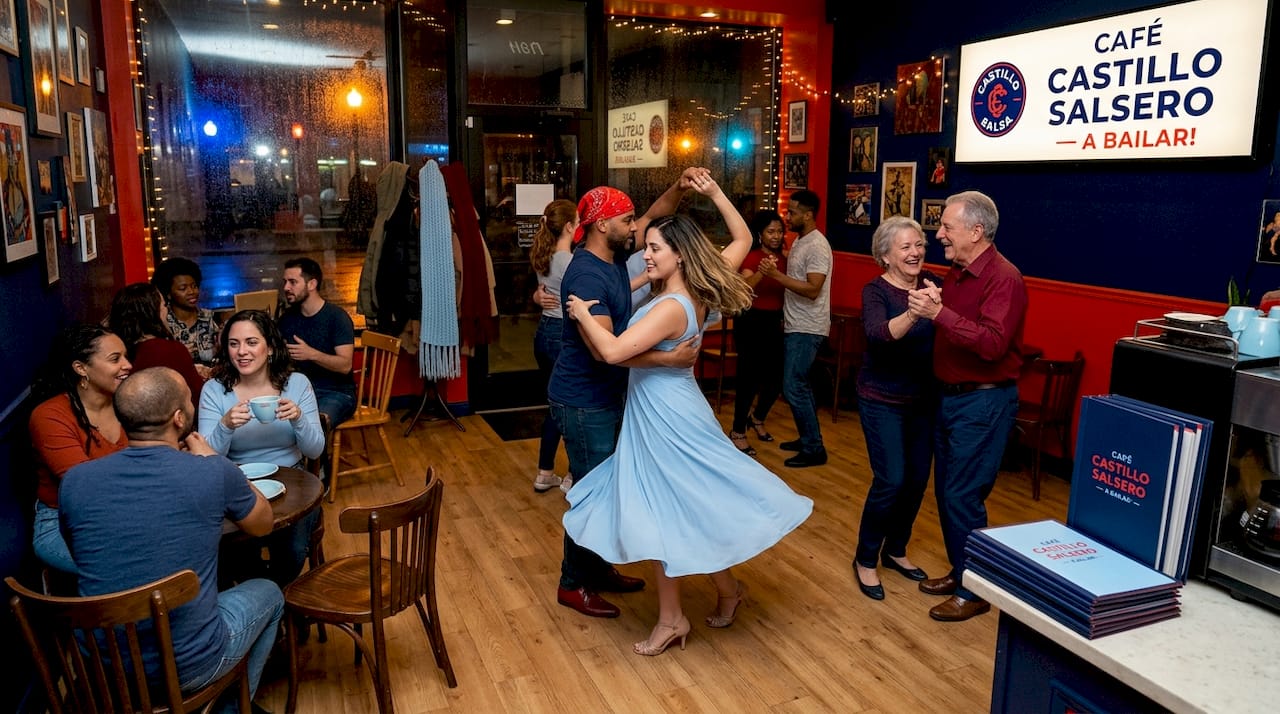
Keine Tanzszene lebt allein von der Technik. Was die Leute Woche für Woche, Monat für Monat wiederkommen lässt, ist die Zugehörigkeit. Die kubanische Salsa-Gemeinschaft in Polen hat eine außergewöhnlich einladende Kultur kultiviert. Anfänger müssen sich nicht minderwertig fühlen. Veteranen machen keine Anstalten, mit Neuankömmlingen zu tanzen. Diese Kultur der Integration ist nicht zufällig. Sie ist ein bewusster Wert, der dem Gemeinschaftsgeist des kubanischen Straßentanzes nachempfunden ist, bei dem jeder unabhängig von seinen Fähigkeiten an der Roda (Kreistanz) teilnimmt.
Das explosionsartige Wachstum der polnischen Salsa-Infrastruktur unterstützt diese Gemeinschaft auf wunderbare Weise. Die wichtigsten Statistiken machen dies deutlich:
📊 Momentaufnahme des Wachstums der Salsa-Szene:
Polens Salsa-Schulen und -Veranstaltungen sind in nur drei Jahren um 50% gewachsen und werden bis 2024 mehr als 200 Schulen erreichen, was das Land zu einem der am schnellsten wachsenden Salsa-Märkte in ganz Mitteleuropa macht.
Der Veranstaltungskalender spiegelt diese Energie wider. In den großen polnischen Städten finden nun regelmäßig Veranstaltungen statt, darunter:
- Wöchentliche soziale Kontakte: In Bars, Clubs und speziellen Tanzlokalen, oft kostenlos oder zu sehr niedrigen Kosten
- Monatliche Themenabende: Kubanische Nächte, afrokubanische Veranstaltungen und Rueda-Festivals
- Jährliche Salsa-Kongresse: Mehrtägige Festivals mit internationalen Dozenten, Shows und Marathon-Veranstaltungen
- Firmen- und Privatveranstaltungen: Unternehmen und Einzelpersonen, die kubanische Salsa-Unterhaltung für Teambuilding und Feiern buchen
Besonders interessant ist der Blickwinkel der Unternehmen. Immer mehr Warschauer und Breslauer Unternehmen integrieren kubanische Salsa-Workshops in ihre Teambuilding-Programme. Die Logik ist einfach. Tanzen erfordert Kommunikation, Vertrauen und Zuhören. Fähigkeiten, die in einem beruflichen Umfeld von enormer Bedeutung sind. Ein zweistündiger Salsa-Workshop baut Hierarchien ab und schafft viel schneller eine echte Beziehung als eine PowerPoint-Präsentation.
Nachdenken darüber, wie Kubanischer Salsa kann gesellschaftliche Feste verändern bei Ihren eigenen Veranstaltungen zeigt, wie vielseitig diese Kunstform ist. Und wenn Sie diese Energie in Ihre Organisation einbringen wollen, ist der Prozess der eine Salsa-Veranstaltung organisieren ist viel einfacher, als die meisten Menschen erwarten.
Pro-Tipp: Wenn Sie Ihr erstes Salsa-Treffen in Polen besuchen, sollten Sie in den ersten 30 Minuten kommen. Die Stimmung ist lockerer, die Tanzlehrer geben oft Mini-Unterricht und es ist viel einfacher, Leute zu treffen, bevor die Tanzfläche überfüllt ist. Diese kleine Anpassung kann Ihre erste Erfahrung völlig verändern.
Qualität und Ansehen: Wie Polen in der weltweiten Salsa-Szene abschneidet
Angesichts der florierenden Gemeinschaft ist es kein Wunder, dass die polnische Salsa-Szene aufgrund ihrer Qualität internationale Aufmerksamkeit erregt.
Internationale Salsa-Reisende, d. h. Menschen, die Städte speziell wegen ihrer Salsa-Szene besuchen, bewerten ihre Reiseziele nach einer Reihe von Kriterien. Die Qualität des Bodens ist wichtig. Die Musikauswahl ist wichtig. Das Niveau der Tänzer spielt eine große Rolle. Und am wichtigsten ist die nicht greifbare Atmosphäre eines Lokals, ob es sich warm und lebendig oder kalt und performativ anfühlt.
Nach diesen Maßstäben schneidet Polen außergewöhnlich gut ab. In den laufenden Gesprächen der globalen Salsa-Gemeinschaft, Polen liegt in Europa an der Spitze für die Qualität der Salsa, wobei die osteuropäischen Tänzerinnen und Tänzer besonders für ihr starkes technisches Fundament und ihre Vorliebe für echten Gesellschaftstanz gegenüber Spektakel gelobt werden.
“Die Osteuropäer, insbesondere die Polen, haben einen guten Ruf für seriöse Qualität. Sie stellen die soziale Erfahrung, die Musik und die Verbindung in den Vordergrund, anstatt nur zu protzen. Das ist selten und wertvoll.” - Internationale Salsa-Gemeinschaftsdiskussion
Was macht eigentlich Qualität in einer Salsa-Szene aus? Die drei Säulen, die Polen immer wieder liefert, sind:
Technisches Grundwissen: Polnische Salsa-Schulen haben eine starke pädagogische Tradition. Die Lehrer legen von der ersten Stunde an Wert auf die richtige Körpermechanik, das Timing und die Musikalität. Die Schüler lernen, auf die Musik zu hören, anstatt mechanisch die Takte zu zählen.
Festivalkultur: Die jährlichen Salsa-Kongresse in Polen haben sich zu international anerkannten Veranstaltungen entwickelt. Die Festivals in Warschau, Wrocław und Krakau locken Top-Lehrer aus Kuba, Kolumbien und der gesamten lateinamerikanischen Welt an. Die Qualität der Produktion kann sich mit Veranstaltungen in Spanien oder Italien messen.
Soziale Intelligenz: Die polnische Salsa-Gemeinschaft versteht den Unterschied zwischen Leistung und Verbindung. Bei den besten polnischen Salsa-Treffen geht es um das gegenseitige Vergnügen und nicht darum, dem Saal zu zeigen, wie beeindruckend man aussieht. Dieser kulturelle Wert führt zu besseren Tänzern und besseren Erfahrungen für alle auf der Tanzfläche.
The positive feedback loop is self-reinforcing. Quality attracts serious students. Serious students develop fast. Fast-developing dancers attract better instructors and bigger festivals. Bigger festivals raise the overall standard further. Understanding how Cuban dance integration elevates events in Poland shows you exactly how this dynamic plays out in practice.
Why Cuban salsa in Poland is more than just a dance trend
Looking beyond reputation and growth, it’s time to consider what Cuban salsa really means for Poland’s cultural landscape.
We have spent time on data, history, and technique. But there is a deeper story worth acknowledging. Cuban salsa arrived in Poland as a niche interest for a small group of adventurous dancers. It has evolved into a mainstream social phenomenon, something entirely different in scale and meaning.
Cuban salsa’s growth into a mainstream phenomenon connects to a broader social need. Polish society, like many European societies, has become more atomized over time. Remote work, digital communication, and urban anonymity have made meaningful in-person connection harder to find. Salsa socials fill that gap. They are one of the few spaces where strangers become partners within seconds, where you cannot look at your phone, and where the energy in the room is entirely human and immediate.
From our experience at Castillo Salsa, we see this reality every single weekend. The people who walk into a Cuban salsa event are not all dancers. They are office workers craving release, couples looking for something new, visitors experiencing Wrocław for the first time, and lifelong learners who simply want to feel alive in a way their daily routine does not offer. Cuban salsa delivers all of that with extraordinary consistency. The rhythm is the invitation. The dance is the reward. And the community is what makes people stay.
This is not a trend. It is a cultural shift, and it is still accelerating. Explore what cultural dance experiences in Wrocław look like in practice and you will understand exactly what we mean.
Discover, dance, and connect with Cuban salsa in Poland
Feeling inspired by the possibilities of Cuban salsa in Poland? Here’s how you can dive in.
Whether you are a complete beginner or a seasoned dancer looking to deepen your connection with the Cuban salsa world, there has never been a better time to get involved. The community is welcoming, the events are frequent, and the quality of instruction across Poland has reached genuinely impressive levels. Start by learning how to boost event engagement with Cuban salsa for your next social gathering, or explore everything you need to know to understand Cuban salsa culture before your first class. If you want to bring this energy to a wedding, birthday, or corporate evening, discover how salsa can completely transform your celebrations in Wrocław and beyond. The dance floor is open.
Häufig gestellte Fragen
When did Cuban salsa first become popular in Poland?
Cuban salsa began gaining traction in Poland in the mid-1990s and saw its biggest surge in popularity following Poland’s EU accession in 2004, which opened up travel and cultural exchange across Europe.
What makes Cuban salsa different from other salsa styles in Poland?
Cuban salsa (Casino style) prioritizes improvisation and circular movement, body isolation, close partner connection, and cultural authenticity, making it feel fundamentally different from the linear, performance-focused LA or New York styles.
How big is the Cuban salsa scene in Poland today?
Poland now has over 200 salsa dance schools, with clubs and events growing more than 50% in the last three years, establishing it as one of the fastest-growing salsa markets in Central Europe.
Where can I find Cuban salsa events and workshops in Poland?
Major cities including Warsaw, Kraków, and Wrocław host active salsa socials, workshops, and annual congresses throughout the year, with Wrocław in particular building a strong reputation for high-quality Cuban salsa experiences.
