
TL;DR:
- Salsa in der Gruppe verwandelt Paartanz in ein gemeinsames Erlebnis, das Spaß macht und für alle Könnensstufen geeignet ist.
- Es baut effektiv soziale Bindungen auf, belebt Veranstaltungen und fördert die Teamarbeit durch synchronisierte Bewegung und Lachen.
- In Wrocław ist der Gruppensalsa aufgrund seiner Zugänglichkeit und kulturellen Anziehungskraft bei Firmen-, Gesellschafts- und Festveranstaltungen beliebt.
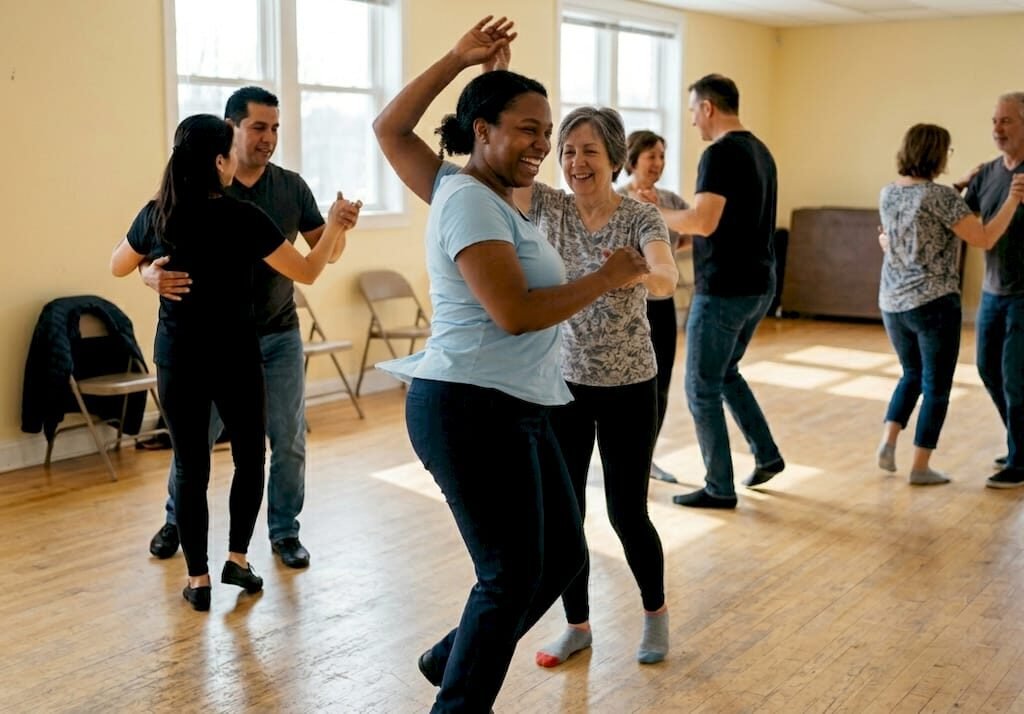
Die meisten Menschen stellen sich unter Salsa zwei Menschen vor, die sich eng umschlungen und synchron zu einem treibenden kubanischen Beat bewegen. Dieses Bild ist real, aber es ist nur die Hälfte der Geschichte. Salsa in der Gruppe dreht das Drehbuch völlig um und verwandelt einen Paartanz in ein gemeinsames, rotierendes, lachendes Erlebnis, das sich für Geburtstagsfeiern, Firmenteams und alles dazwischen eignet. Salsa) war schon immer von einer sozialen Energie geprägt, und Gruppenformate lassen diese Energie einfach auf einen ganzen Raum übergreifen. In diesem Leitfaden wird genau erklärt, was Salsa-Gruppenaktivitäten sind, warum sie bei Veranstaltungen in Wrocław so gut funktionieren und wie Sie sie bei Ihrem nächsten Treffen einsetzen können.
Wichtigste Erkenntnisse
| Punkt | Einzelheiten |
|---|---|
| Jenseits des Paartanzes | Beim Gruppensalsa ist jeder willkommen, es werden keine festen Partner benötigt, was die Energie und die Inklusivität erhöht. |
| Ideal für Veranstaltungen | Gruppen-Salsa belebt Feiern und Teambuilding und schafft unvergessliche gemeinsame Erlebnisse. |
| Einfacher Start | Jeder kann mitmachen, dank leicht zu erlernender Schritte, Rufe und Gruppenformationen, die von einem Leiter angeleitet werden. |
| Einfache Integration | Mit Hilfe von lokalen Lehrern oder Organisatoren können Sie fast jede Veranstaltung in Wrocław mit Salsa bereichern. |
Was ist eine Salsa-Gruppenaktivität?
Eine Salsa-Gruppenaktivität ist ein organisiertes Tanzerlebnis, an dem drei oder mehr Personen gemeinsam teilnehmen, sich in koordinierten Mustern bewegen, die Partner wechseln und auf gemeinsame Hinweise reagieren. Es ist kein freies Spiel. Er hat eine Struktur, einen Rhythmus und eine soziale Logik, die es überraschend einfach macht, mitzumachen, selbst wenn man noch nie getanzt hat.
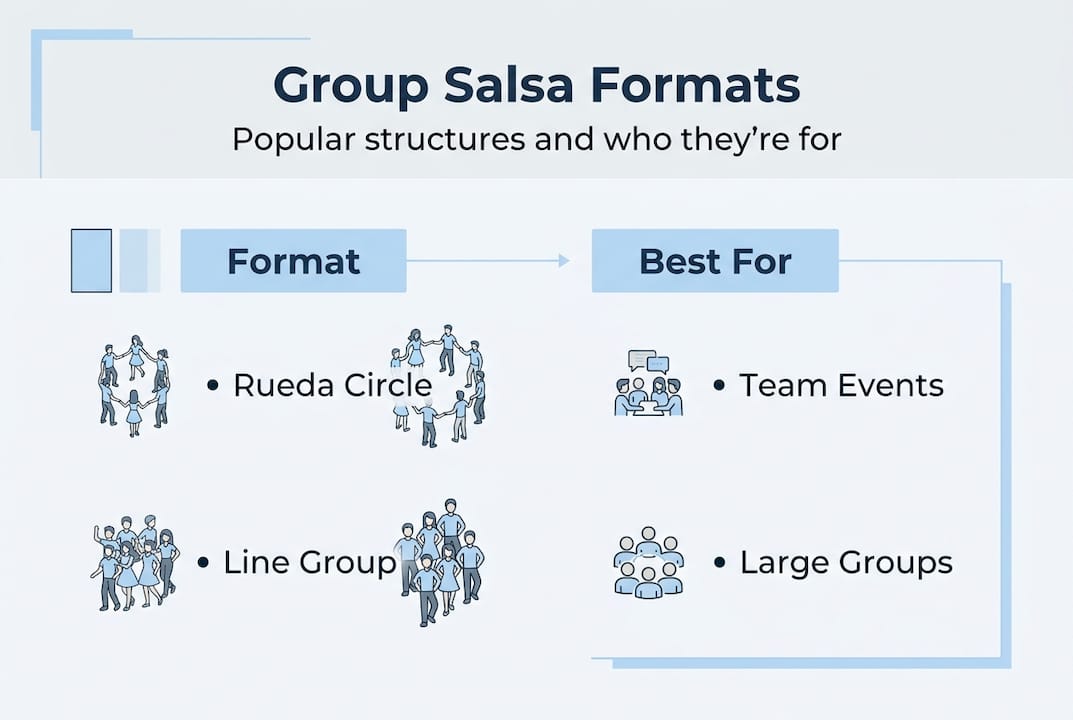
Das kultigste Format ist Rueda de Casino, Ein kubanischer Kreistanz, bei dem ein bestimmter Ausrufer die Bewegungen ankündigt und jeder auf das Stichwort hin den Partner wechselt. Die Kubanischer Rueda-Stil ist schnell, spielerisch und konzentriert sich auf die Gruppenkoordination und nicht auf individuelle Showeinlagen. Andere Formate sind Salsa-Räder, offene Kreise und soziale Mischspiele, bei denen sich die Teilnehmer frei in der Gruppe bewegen.
Hier eine kurze Übersicht über die wichtigsten Formate:
| Format | Struktur | Am besten für |
|---|---|---|
| Rueda de Casino | Kreis mit vom Anrufer geleiteten Bewegungen | Große Gruppen, Teamevents |
| Salsa-Rad | Rotierende Paare im Kreis | Gemischte Kompetenzstufen |
| Offener sozialer Kreis | Freie Rotation, kein fester Anrufer | Partys, zwanglose Veranstaltungen |
| Solo-Salsa-Aufwärmen | Individuelle Bewegung, kein Partner | Anfänger, Eisbrecher |
Der Salsa-Grundrhythmus hat eine Geschwindigkeit von 150 bis 250 Schlägen pro Minute, wobei die Tänzerinnen und Tänzer 3 Schritte auf 4 Schlägen machen. Die kleine Pause auf dem 4. Taktschlag macht den Zauber aus und schafft einen natürlichen Moment der Vorfreude auf die nächste Bewegung. In Gruppenformaten teilen alle diese Pause gemeinsam, was ein sofortiges Gefühl der Verbundenheit schafft.
Schlüsselelemente, die eine Salsa-Gruppenaktivität ausmachen:
- Partner-Rotation: Niemand ist die ganze Zeit an einen Partner gebunden
- Aufruf und Antwort: Ein Anrufer kündigt Züge an; die Gruppe antwortet gemeinsam
- Synchronisierung: Alle bewegen sich im gleichen Takt und schaffen so visuelle Harmonie
- Inklusivität: Anfänger und erfahrene Tänzer teilen sich eine Tanzfläche
- Kulturelles Flair: Kubanische Musik, Rhythmus und Stil prägen das Erlebnis
Profi-Tipp: Gruppe Salsa tatsächlich senkt den Druck auf die Anfänger. Wenn 20 Leute alle über denselben Schritt lachen, fühlt sich niemand ausgegrenzt. Die Energie der Gruppe treibt jeden voran.
Der Unterschied zum Paar-Salsa ist wichtig. Paar-Salsa belohnt technische Präzision und eine über lange Zeit aufgebaute Partnerchemie. Gruppen-Salsa belohnt Präsenz, Reaktionsfähigkeit und die Bereitschaft zu lachen, wenn etwas schief läuft. Beide sind gültig. Aber bei Veranstaltungen gewinnt der Gruppensalsa jedes Mal.
Warum Gruppen-Salsa perfekt für Veranstaltungen und Teams ist
Da Sie nun wissen, was eine Gruppensalsa ist, wollen wir sehen, warum sie in Gruppen und bei Veranstaltungen so gut funktioniert.
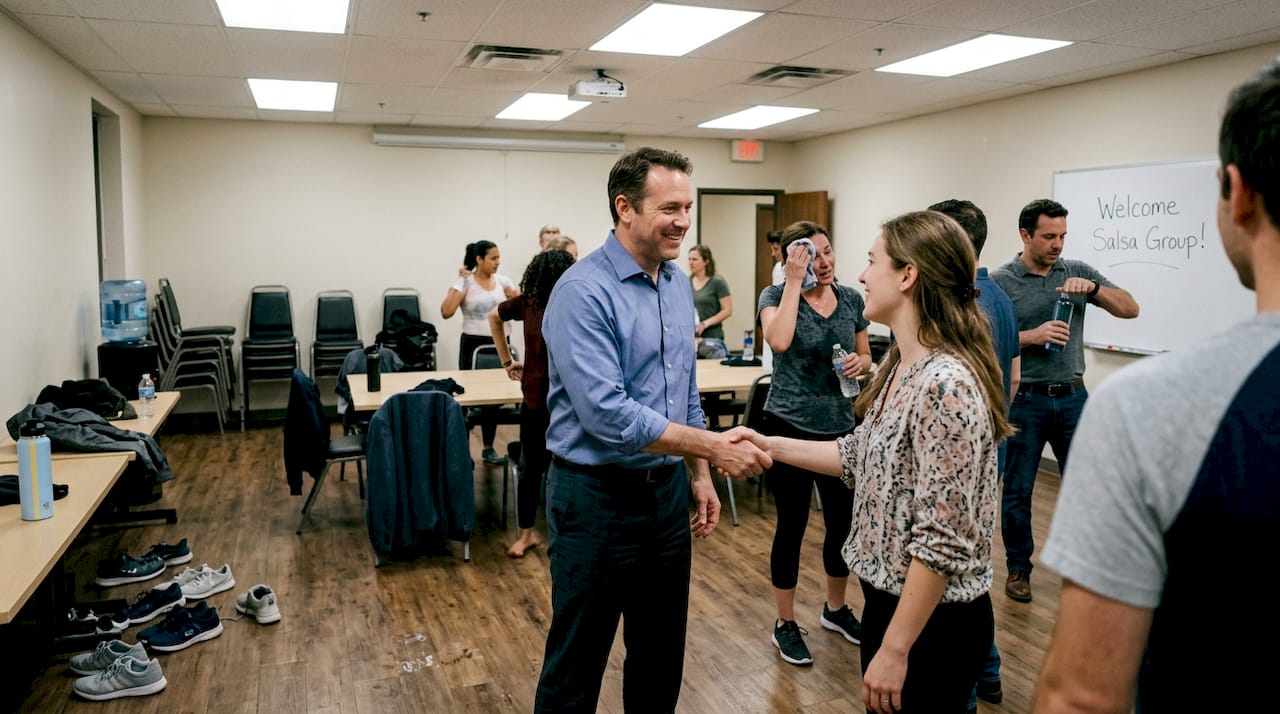
Der größte Vorteil von Salsa in der Gruppe gegenüber anderen Veranstaltungsaktivitäten ist, dass es erfordert keine vorherige Beziehung zwischen den Teilnehmern. Sie brauchen keinen Partner, keinen Mitspieler, nicht einmal eine gemeinsame Sprache. Die Musik macht die Einleitung. Die Call-and-Response-Struktur in Formaten wie Rueda de Casino bedeutet, dass alle gleichzeitig auf das gleiche Stichwort reagieren, was ein sofortiges gemeinsames Erlebnis schafft.
Vergleichen Sie sie mit anderen beliebten Veranstaltungsaktivitäten:
| Tätigkeit | Benötigen Sie einen Partner? | Physisches Engagement | Kultureller Reichtum | Skaliert für große Gruppen? |
|---|---|---|---|---|
| Gruppe Salsa | Nein | Hoch | Hoch | Ja |
| Trivia-Abend | Nein | Niedrig | Niedrig | Ja |
| Fluchtraum | Nein | Mittel | Niedrig | Begrenzt |
| Kochkurs | Nein | Mittel | Mittel | Ja |
| Tanzunterricht für Paare | Ja | Hoch | Mittel | Begrenzt |
Gruppensalsa übertrifft durchweg die Alternativen, wenn es um Energie, Engagement und unvergessliche Momente geht. Es bringt die Leute in Bewegung, was Endorphine freisetzt und soziale Ängste abbaut. Jeder hat eine gemeinsame Aufgabe, was schnell zu einer vorübergehenden Teamidentität führt.
Hier erfahren Sie, warum es für bestimmte Anwendungsfälle so gut funktioniert:
- Teambildung für Unternehmen: Salsa für die Teambildung funktioniert, weil es die Dynamik am Arbeitsplatz widerspiegelt. Sie hören einem Anrufer zu, reagieren schnell, stellen sich auf neue Partner ein und unterstützen den Gruppenrhythmus. Dies sind die gleichen Fähigkeiten, die Teams bei der Arbeit effektiv machen.
- Geburtstagsfeiern: Bei der Gruppensalsa steht das Geburtstagskind im Mittelpunkt des Geschehens, und alle Gäste werden in den Spaß einbezogen, unabhängig von Alter und Herkunft.
- Junggesellen- und Junggesellinnenabschiede: Durch die Rotation mischen sich alle, die Energie bleibt hoch, und das Erlebnis ist wirklich unvergesslich und nicht nur laut.
- Gesellige Zusammenkünfte und Networking-Veranstaltungen: Gruppen-Salsa ist ein bewährtes Eisbrecher für Veranstaltungen weil es den peinlichen “Was machst du denn so?”-Moment beseitigt und durch gemeinsames Lachen ersetzt.
“Die Synchronisation beim Gruppentanz schafft ein messbares Gefühl der Verbundenheit und des Vertrauens zwischen den Teilnehmern, selbst unter Fremden.”
Die Ergebnisse sprechen eine deutliche Sprache: Stärkere soziale Bindungen, höhere Zufriedenheit mit der Veranstaltung und Geschichten, die die Menschen im Nachhinein tatsächlich weitererzählen. Das ist in der Eventplanung selten.
Wie Salsa in der Gruppe funktioniert: Schlüsselelemente und Ablauf
Um die Vorteile zu verstehen, sollten Sie wissen, wie eine Salsa-Gruppenaktivität bei einer Veranstaltung abläuft.
Eine gut organisierte Salsa-Gruppensitzung folgt einem klaren Ablauf. Sie beginnt zugänglich, baut allmählich Energie auf und gipfelt schließlich darin, dass sich alle gemeinsam in etwas bewegen, das sich wirklich beeindruckend anfühlt. Hier ist der typische Ablauf:
- Aufwärmen (5 bis 10 Minuten): Der Kursleiter führt jeden einzeln durch den Salsa-Grundschritt. Keine Partner, kein Druck. Nur die Füße finden den Takt. Hier stellen die meisten Leute fest, dass es einfacher ist, als sie erwartet haben.
- Vorstellen der Anrufe (10 Minuten): Die Gruppe lernt 3 bis 5 Schlüsselrufe, die in Rueda verwendet werden. Jeder Call hat einen einfachen Namen und einen entsprechenden Zug. Die Calls und die Synchronisation) in Rueda de Casino sind der Motor des ganzen Erlebnisses.
- Kreisbildung (5 Minuten): Alle bilden Paare und bilden den Rueda-Kreis. Der Rufer steht in der Mitte oder ruft aus dem Kreis heraus.
- Die Rotation beginnt (15 bis 20 Minuten): Der Aufrufer kündigt Züge an. Die Partner wechseln sich ab. Es wird gelacht. Die Gruppe beginnt, sich wie eine Einheit zu fühlen.
- Gruppeninteraktion und Freestyle (10 Minuten): Die Struktur wird etwas gelockert, so dass mehr spontane Momente möglich sind, ohne dass die Energie der Gruppe verloren geht.
Die Rolle des Callers ist von zentraler Bedeutung. Ein guter Caller liest den Raum, passt das Tempo an und hält die Energie in Bewegung, ohne die Anfänger zu überwältigen. Er ist teils Ausbilder, teils Entertainer und teils Dirigent.
Was die Teilnehmer während einer Sitzung tatsächlich erleben, ist bemerkenswert. Sie müssen ständig kleine Entscheidungen treffen: auf den Anruf warten, antworten, sich auf einen neuen Partner einstellen, im Takt bleiben. Es ist geistig anregend, ohne stressig zu sein. Die meisten Teilnehmer beschreiben, dass es sich eher wie ein Spiel anfühlt als wie ein Kurs.
Profi-Tipp: Bitten Sie Ihren Organisator, bei Firmengruppen das Tempo der Rotation in den ersten 10 Minuten zu verlangsamen. Wenn Sie den Teilnehmern vor der ersten Rotation etwas mehr Zeit mit jedem Partner geben, baut das Vertrauen auf und verringert den “Warte, was passiert gerade?”-Moment, der die Energie blockieren kann.
Die Arbeitsablauf einer kubanischen Salsa-Party folgt einem ähnlichen Bogen, und das Verständnis der Salsa-Unterrichtsablauf hilft den Veranstaltern, realistische Erwartungen an ihre Gäste zu stellen.
So bringen Sie Gruppen-Salsa zu Ihrer nächsten Veranstaltung in Wrocław
Fühlen Sie sich inspiriert? Hier erfahren Sie, wie Sie Ihren nächsten Anlass in Wrocław mit einem unvergesslichen Salsa-Gruppenerlebnis bereichern können.
Wrocław ist eine wirklich starke Stadt für diese Aufgabe. Die multikulturelle Energie, der starke Unternehmenssektor und die aktive soziale Szene schaffen genau die Art von Publikum, das auf die Attraktivität von Gruppensalsa bei Unterhaltungsveranstaltungen reagiert. Die Stadt hat die Veranstaltungsorte, den Appetit und die Vielfalt, um Gruppen-Salsa jedes Mal zum Erfolg zu verhelfen.
Es gibt drei Möglichkeiten, Gruppen-Salsa in eine Veranstaltung zu integrieren:
- Workshop-Format: Ein Ausbilder unterrichtet die Gruppe schrittweise. Am besten geeignet für teambildende Veranstaltungen, bei denen das gemeinsame Lernen Teil des Ziels ist.
- Show plus Teilnahme: Eine professionelle Darbietung eröffnet die Veranstaltung, danach sind die Gäste eingeladen, an einer vereinfachten Version teilzunehmen. Am besten für Partys und Feiern geeignet.
- Aktivität im offenen Kreis: Eine von einem Caller geleitete Rueda-Session mit leichter Anleitung. Am besten für Gruppen mit etwas Tanzerfahrung oder für Veranstaltungen, bei denen Spontaneität gefragt ist.
Hier finden Sie eine praktische Checkliste für die Vorbereitung:
| Faktor | Empfehlung |
|---|---|
| Weltraum | Mindestens 2 Quadratmeter pro Person auf der Tanzfläche |
| Musik | Live-DJ oder kuratierte kubanische Salsa-Playlist mit 160 bis 200 bpm |
| Größe der Gruppe | Funktioniert am besten mit 10 bis 60 Teilnehmern |
| Zeitplan der Sitzung | 30 bis 60 Minuten innerhalb eines größeren Veranstaltungsprogramms |
| Ausbilderverhältnis | 1 Ausbilder pro 20 Teilnehmer für Workshops |
Worauf Sie bei einem Veranstaltungspartner achten sollten:
- Erfahrung mit Nicht-Tänzern und Gruppen mit unterschiedlichen Fähigkeiten
- Möglichkeit, die Sitzung an den Ton Ihrer Veranstaltung anzupassen
- Klare Kommunikation vor der Veranstaltung über Logistik und Erwartungen
- Erfolgsbilanz bei Unternehmens- und Gesellschaftsveranstaltungen im Besonderen
Entdecken Ideen für Salsa-Unterhaltung um zu sehen, wie verschiedene Formate zu Ihrem speziellen Anlass passen können. Wenn Sie sehen möchten, wie ein professioneller Auftritt aussieht, bevor Sie sich festlegen, schauen Sie sich Salsa-Tanzshows gibt Ihnen einen guten Eindruck von der Energie und dem Produktionsniveau, das Sie erwarten können.
Eine neue Perspektive: Warum Gruppen-Salsa das ultimative Bindeglied in Wrocław ist
Die meisten Ratgeber für Veranstaltungen verschweigen Ihnen etwas: Die einzelnen Schritte sind eigentlich gar nicht so wichtig.
Wir haben Hunderte von Menschen beobachtet, die zum ersten Mal Salsa in einer Gruppe ausprobiert haben. Die Momente, die eine echte Verbindung schaffen, sind nicht die sauberen Drehungen oder die perfekt getimten Aufrufe. Es sind die Stolperer, die Lacher, die “Moment, war ich das?”-Blicke, die zwischen Fremden ausgetauscht werden, die gerade zu Partnern auf Zeit geworden sind. Das sind die Momente, in denen die Bindung entsteht.
Wrocław ist eine Stadt voller Menschen aus verschiedenen Ländern, Branchen und sozialen Kreisen. Die Salsa-Gruppe verlangt von niemandem, dass er sich erklärt. Sie müssen nur kommen, zuhören und sich bewegen. Das ist eine bemerkenswert niedrige Hürde für eine bemerkenswert hohe Belohnung.
Bei den meisten Teambuilding-Aktivitäten wird versucht, durch strukturierte Übungen Vertrauen zu schaffen. Beim Gruppensalsa entsteht es als Nebeneffekt des gemeinsamen Rhythmus und des gemeinsamen Lachens. Die unvergessliche Salsa-Erlebnisse in Wrocław an denen wir teilgenommen haben, waren nicht denkwürdig, weil alle perfekt getanzt haben. Sie waren unvergesslich, weil etwas Echtes zwischen Menschen passierte, die sich eine Stunde zuvor noch nicht kannten.
Machen Sie sich keine Gedanken darüber, ob Ihre Gruppe tanzen kann. Konzentrieren Sie sich darauf, ob sie zusammen lachen können. Das können sie. Die Gruppen-Salsa wird den Rest erledigen.
Sind Sie bereit, Ihre Veranstaltung mit Salsa für Gruppen unvergesslich zu machen?
Wenn dieser Artikel Sie dazu gebracht hat, über Ihre nächste Veranstaltung anders zu denken, dann ist das genau der Punkt. Gruppen-Salsa ist kein neuartiges Zusatzprogramm. Es ist ein bewährtes Mittel, um einen Raum zu beleben, Menschen zusammenzubringen, die sonst nicht interagieren würden, und jedem eine Geschichte zu geben, die er hinterher erzählen kann.
Bei Castillo Salsa haben wir uns auf genau das spezialisiert. Ob Sie kubanischen Gruppensalsa zum ersten Mal entdecken wollen, laufen Workshops zur Teambildung für Ihr Unternehmen, oder suchen Sie nach neuen Event-Inspirationen für eine Feier in Wrocław, wir haben maßgeschneiderte Lösungen parat. Jede Session wird an die Größe Ihrer Gruppe, Ihr Erfahrungsniveau und die Ziele Ihrer Veranstaltung angepasst. Sprechen Sie uns an und lassen Sie uns gemeinsam etwas aufbauen, über das es sich zu tanzen lohnt.
Häufig gestellte Fragen
Was ist der Unterschied zwischen einer Gruppen-Salsa und einer normalen Salsa?
Beim Gruppensalsa tanzen mehrere Personen in synchronen Formationen mit Partnerwechseln zusammen, während der normale Salsa in der Regel von Paaren getanzt wird. Die Gruppenvarianten fügen eine Call-and-Response-Ebene hinzu, die es beim Paar-Salsa nicht gibt.
Brauchen Sie einen Partner für eine Salsa-Gruppenaktivität?
Nein, Sie brauchen keinen festen Partner. Das Rotationsformat bedeutet, dass jeder mehrere Partner durchläuft, und die Gruppenbeteiligung ist so konzipiert, dass es von Anfang an ohne feste Paare funktioniert.
Wie lange dauert eine Salsa-Gruppensitzung bei Veranstaltungen?
Eine typische Sitzung dauert zwischen 30 und 60 Minuten, kann aber aufgrund der Flexibilität des Formats verkürzt oder verlängert werden, um sie an den Zeitplan Ihrer Veranstaltung und die Energie der Gruppe anzupassen.
Warum ist Salsa in Gruppen bei Veranstaltungen in Wrocław so beliebt?
Salsa in der Gruppe schafft schnell eine gute Gruppenchemie und macht Spaß. Das macht es ideal für Wrocławs Mischung aus Firmenteams, internationalen Gemeinschaften und sozialen Gruppen, die auf der Suche nach echten Verbindungen bei Veranstaltungen sind.
